Viper Unleashed: The Toxic Chemist Who Turns Valorant into a Fume-Filled Nightmare
This Viper VALORANT guide breaks down the toxic controller's abilities to help you lock down sites with chemical warfare.
Since VALORANT first crashed onto the scene, it’s been a relentless playground of gunplay and supernatural abilities. By 2026, the roster has ballooned, but some agents remain eternal legends. Viper is one of those icons—a green-clad specter of chemical warfare who makes opponents cough up more than just excuses. She isn’t just another controller; she’s the personification of territorial denial, a walking hazmat disaster that turns tight corridors into fume-choked deathtraps. If you’ve ever rounded a corner only to find your vision obliterated and your health bar dissolving, you’ve met Viper’s handiwork. Let’s be real—she’s the reason some players develop an irrational fear of green smoke.
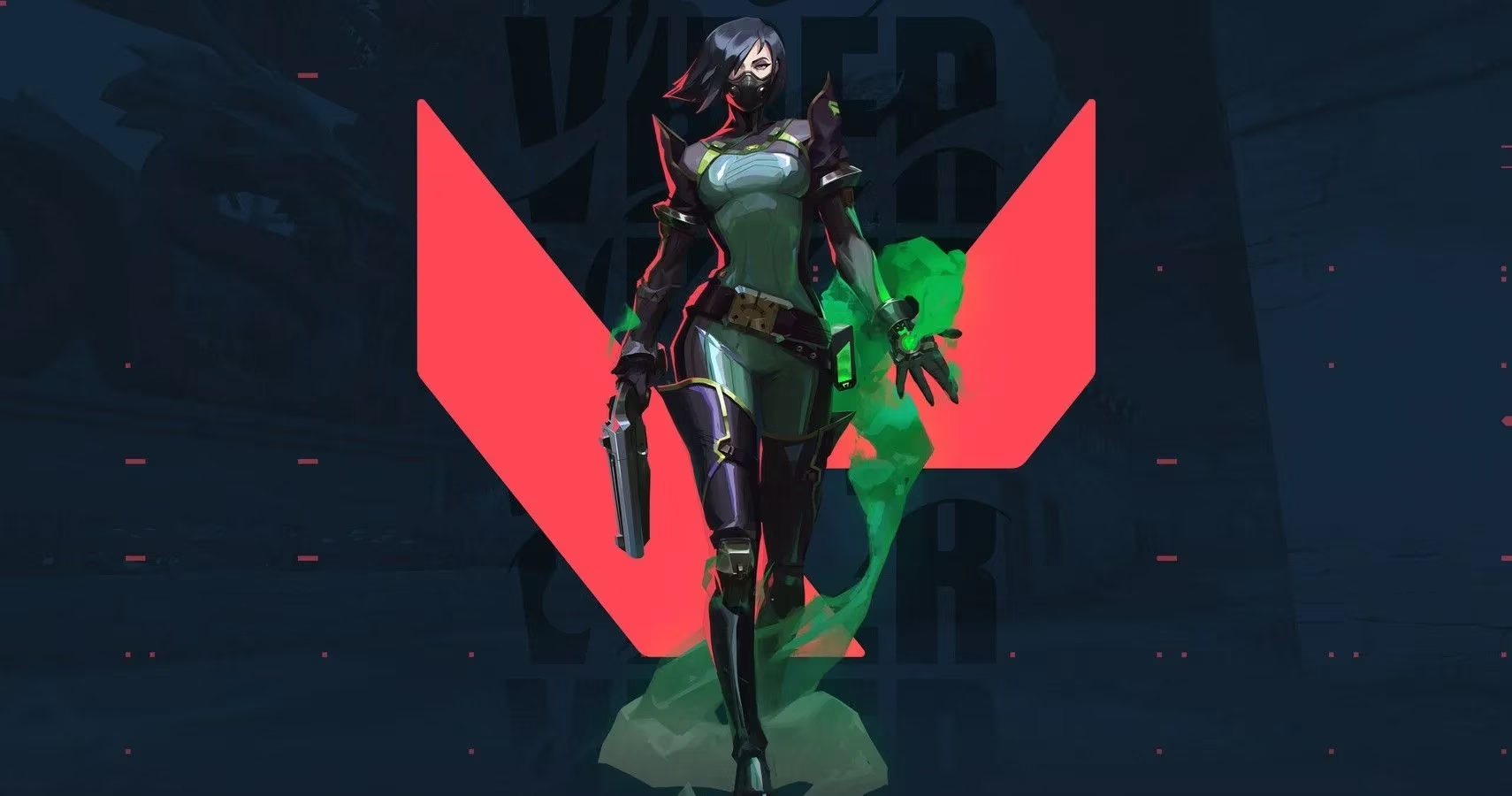
Hailing from the United States, Viper is a scientist whose relationship with toxic chemicals borders on romantic obsession. She dons a sleek green bodysuit and a mask that protects her from her own creations, which, honestly, is probably the smartest fashion choice in the entire agent lineup. While others bring flashy fireballs or healing orbs, Viper brings a PhD in venom and a suitcase full of emitters. She doesn’t just want to kill you; she wants to make the very air you breathe her weapon. There’s something delightfully theatrical about the way she sets up her poison clouds—like a grumpy theater director insisting the stage must be just right, except the stage is the Spike site and the audience is about to have a really bad day.
Viper’s kit revolves around area denial, vision obstruction, and passive damage that forces enemies to second-guess every step. She’s not a duelist who thrives in face-to-face gunfights; she’s a puppeteer who manipulates map flow with a few well-placed gadgets. Mastering her feels less like playing a shooter and more like conducting an experiment where the hypothesis is “Will you dare walk through this?” The answer is usually a resounding ouch.
Her Chemical Toolkit: A Breakdown of Controlled Chaos
| Ability | Type | Description |
|---|---|---|
| Snakebite | Purchasable | Fires an acid projectile that explodes on contact, delivering corrosive damage to anyone caught in the splash. It’s like throwing a science fair volcano, but the eruption actually hurts. |
| Poison Cloud | Purchasable | Tosses an emitter that creates a stationary toxic sphere. Enemies who step inside start melting. Perfect for telling people, “No, you can’t defuse here.” |
| Toxic Screen | Signature | Deploys emitters in a line to summon a wall of burning gas. This wall blocks vision and damages interlopers. It runs on fuel, so Viper has to manage her resources—think of it as her personal “do not disturb” sign, but it runs on gas. |
| Viper’s Pit | Ultimate | Hurls a spike that, after a short delay, creates a massive toxic ring. Viper roams freely inside, while enemies suffer damage and get highlighted with a sickly glow. It’s her own personal murder dome. |
Let’s talk about that signature ability, Toxic Screen, because it’s the spine of her entire playstyle. Viper carries a fuel gauge that depletes while the wall is active and refills when it’s off. Smart Viper players treat that fuel like a miser treats gold—never wasting a drop unless it guarantees map control. The wall doesn’t just block sight; it carves the battlefield into manageable slices. A well-placed screen can separate a site push from its support, leaving attackers stranded in no man’s land with a very unfriendly green glow as their only guide. Seriously, walking through a Toxic Screen feels less like a tactical decision and more like a bad breakup—you know it’s going to hurt, but sometimes you just have to see for yourself.
Snakebite and Poison Cloud are the two abilities you can purchase each round, and they’re what make Viper so flexible in the early game. Snakebite is your direct damage tool—imagine lobbing a bottle of angry, fizzing acid that eats through anything it touches. It’s great for clearing corners or punishing a stuck opponent. Poison Cloud, on the other hand, lets you temporarily lock down a choke point. Toss it on a doorway, and suddenly that entrance becomes a no-go zone. The beauty is you can turn the cloud on and off at will by recalling the emitter, saving fuel and regaining the ability to redeploy later. It’s basically a remote-controlled “nope” button.
And then there’s the ultimate, Viper’s Pit, which transforms her into the final boss of any round. The spike takes a couple of seconds to activate—just enough time for enemies to panic—and then a colossal ring of death blossoms outward. Inside, Viper is queen. Her vision is slightly restricted but not impaired, while enemies are highlighted in a ghastly red outline and take steady damage. This encourages a terrifying game of hide-and-seek where Viper is the only one allowed to have fun. Watching her circle a Pit, casually picking off blinded prey, makes you wonder if she might enjoy her job a little too much.
Viper’s entire identity screams control freak, but in the most respectful way possible. She doesn’t charge into battle; she claims territory and dares anyone to evict her. In a game where split-second aim often decides winners, Viper asks a different question: what if you couldn’t see anything and the ground you stood on was trying to melt you? Answering that question poorly is why so many duelists end their rounds face-down in a puddle of their own regrets.
Since her debut in 2020, Viper has undergone numerous tweaks—fuel adjustments, toxic screen visibility changes, ultimate radius fine-tuning—but her core identity remains untouched. In 2026, she still commands respect on maps like Breeze and Icebox, where long sightlines and open spaces beg for the controlled privacy her walls provide. She’s not the easiest agent to pick up—you need to memorise lineups, manage fuel like a budget manager, and predict enemy rotations three steps ahead. But once you master her, you’ll find yourself cackling behind your mask as confused foes wander into your carefully curated chemical hellscape.
One more thing: Viper’s personality leaks into her voice lines with a cold, calculated edge that makes her sound like she’s always one step ahead. “Don’t breathe too deeply,” she warns, and you just know she means it. Her mask muffles her voice just enough to add an air of mystery, as if she’s whispering secrets to her poisons. It’s this combo of visual style, tactical depth, and slightly unhinged demeanour that keeps Viper fans loyal through every meta shift. So next time you load into a match and see a green silhouette in the agent select, remember: someone’s about to have a very bad day, and it probably won’t be Viper.
As you continue to sharpen your skills with Viper and other agents, keeping an eye on game trends and updates can be crucial. Whether you're a seasoned veteran or a newcomer eager to dive into the tactical depths of competitive gaming, staying informed about the latest developments in your favorite games is key. Keeping track of game prices and availability is one part of this, especially if you're looking to expand your collection or upgrade your gaming setup.
For gamers who want to ensure they are getting the best deals on their purchases, utilizing resources like a game price tracker can be incredibly beneficial. This tool helps you monitor changes and fluctuations in game prices, ensuring you never miss out on a great deal. As you strategize and plan your next move in the virtual battlefield, let DealNest assist you in making informed purchasing decisions, so you can focus on what truly matters—dominating the competition.
Comments