VALORANT vs. Overwatch in 2026: Still Not the Same Beast
VALORANT vs. Overwatch: tactical shooter meets hero shooter, but agent locks, gun-first duels, and round economy keep them distinct beasts.
Hey, let’s talk about the whole VALORANT vs. Overwatch debate. Back when Riot’s tactical shooter was in closed beta, folks were calling it an Overwatch killer. In 2026? That take feels like old news, but the comparison still pops up every time a new agent drops or Overwatch 2 shakes up its meta. So I figured I’d break down why these two shooters are still different beasts — and why that’s a good thing.
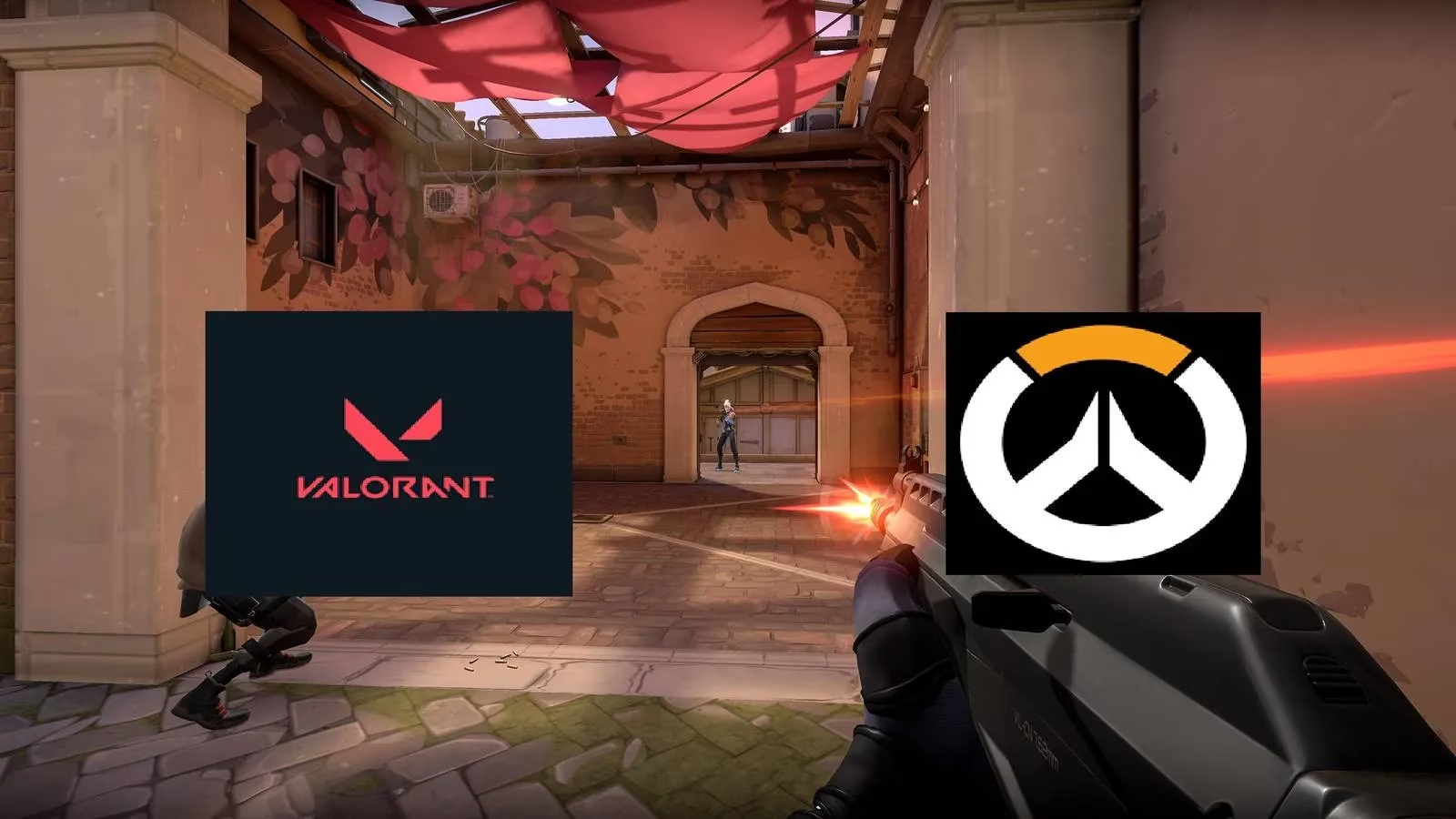
Characters: Heroes vs. Agents
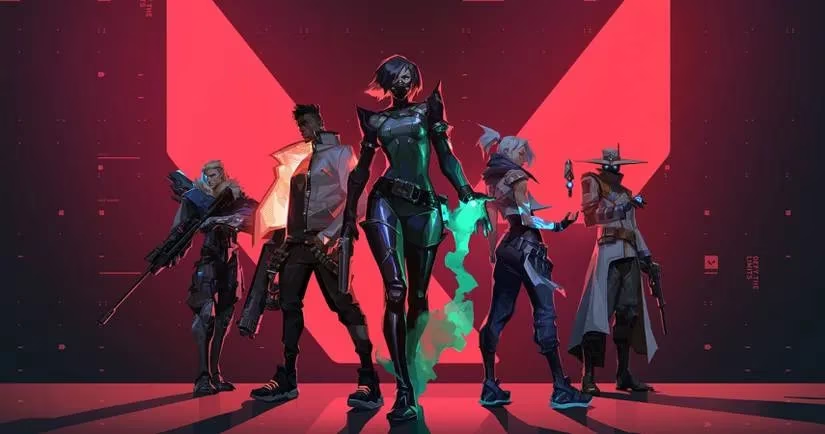
First things first: the rosters. Overwatch 2 has a big lineup of heroes sorted into tank, damage, and support. Teams are five players now — one tank, two damage, two support. VALORANT has over two dozen agents split into Duelist, Initiator, Sentinel, and Controller. Teams are five players, period. No role queue, just vibes and comms.
The biggest difference? Overwatch lets you swap heroes mid-match. You can counter-pick on the fly, which is huge. VALORANT locks you in once you pick an agent. That one rule changes everything. You can’t just switch to a counter after getting rolled; you live with your choice, so drafting and team comp matter before the first shot is even fired.
Abilities: Core Kit vs. Utility Toolbox
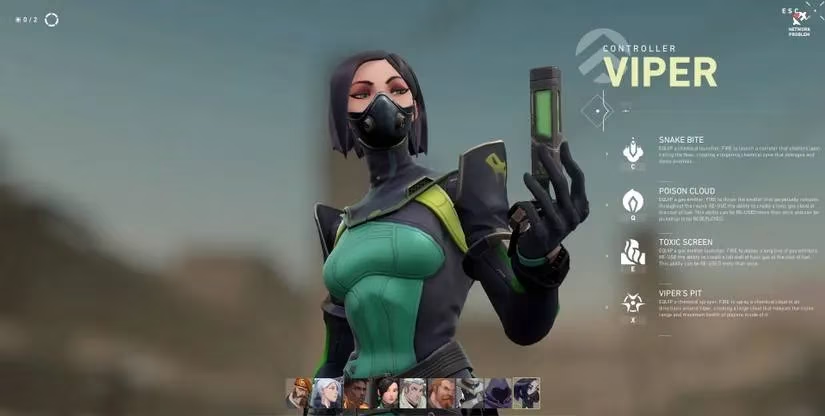
Overwatch is ability-first. A hero’s kit defines how they play, and guns mostly charge ultimates. You can’t really play a full match without pressing abilities — that’s the whole game. VALORANT is gun-first. Abilities are utility: smokes, flashes, recon, walls, traps, and healing. You can technically win a round without pressing a single ability, though I wouldn’t recommend it. Aim and map knowledge are king. A clean headshot beats a fancy ability almost every time.
Gameplay Loop: Teamfight Chaos vs. Round-Based Tension
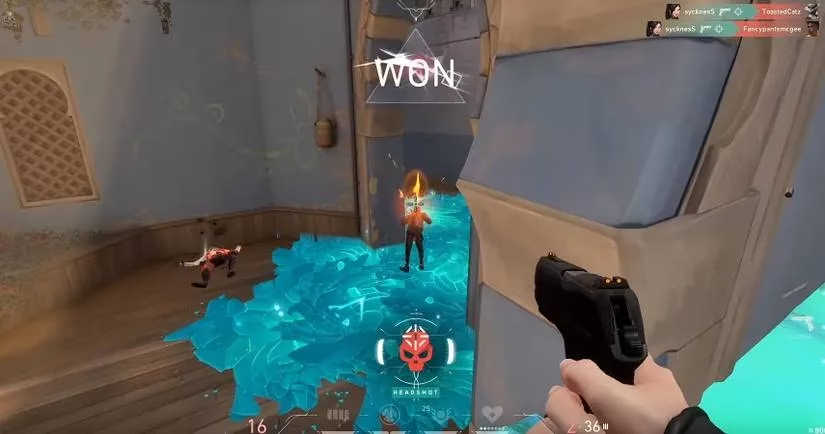
Overwatch is respawn-heavy, objective-based, and full of teamfight chaos. Modes include assault, control, escort, hybrid, push, flashpoint, and clash. Teamfights can drag on because of shields, healing, and ult combos. VALORANT’s core is search-and-destroy: attack plants the Spike, defense retakes, first to 13 rounds wins, best of 25. One life per round. No respawn until the next round, unless Sage revives you or Clove pulls off some self-revive shenanigans. Duels last seconds. One tap and you’re out.
Economy: Ult Charge vs. Credits
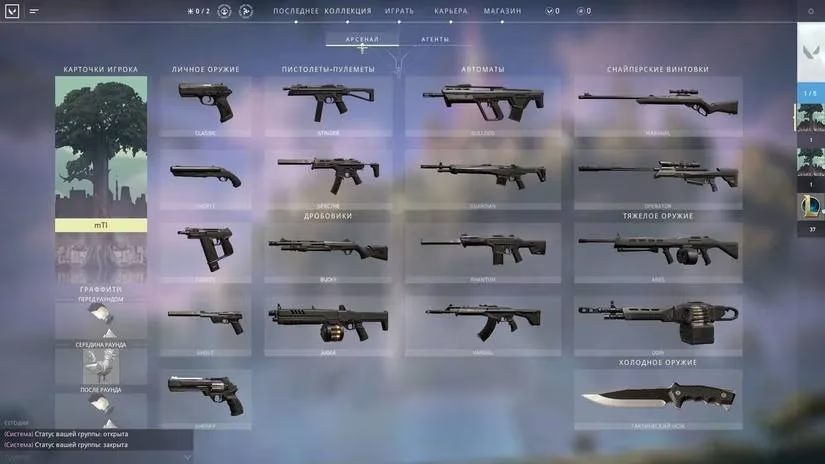
Overwatch has an ult economy — no item buying, but you track who has ult and when to use it. VALORANT has a full buy phase with credits for guns, armor, and abilities. You track both teams’ money, call eco rounds, force buys, and save rounds. It’s a chess match with guns. Mess up your economy and you’re stuck with a Classic while the enemy team has Vandals and Operators. Rough.
Quick Comparison Table
| Category | Overwatch 2 (2026) | VALORANT (2026) |
|---|---|---|
| Team size | 5v5 role queue | 5v5 |
| Character roles | Tank, Damage, Support | Duelist, Initiator, Sentinel, Controller |
| Hero/agent swapping | Yes, mid-match | No, locked after pick |
| Ability importance | Core to playstyle | Utility, gunplay primary |
| Respawn | Yes, after death | No, until next round (mostly) |
| Core mode | Multiple objective modes | Spike search-and-destroy, first to 13 |
| Economy | Ult charge economy | Credits, buy phase, ult points |
| Main skill | Movement, cooldowns, team synergy | Aim, map knowledge, economy, utility |
So, Is VALORANT an Overwatch Killer in 2026?
Nah. Not even close. Overwatch 2 is still kicking, still getting new heroes and modes, and still has a dedicated player base. VALORANT has grown into its own esports monster with agents, maps, Premier, and a thriving competitive scene. They appeal to different audiences. If you love hero kits, teamfights, and swapping to counter, Overwatch is your jam. If you love tac-shooter gunfights, clutch headshots, economy management, and holding an angle with a Vandal, VALORANT is the move.
I play both depending on my mood. Sometimes I wanna zip around as Tracer and annoy the enemy backline. Sometimes I wanna sit on a site with a Sheriff and one-tap someone who peeks wrong. Both are valid. Both are fun. No cap.
Final Thoughts
The original comparison made sense during the closed beta, but now both games have evolved. Overwatch 2 has new heroes, modes, and a 5v5 format. VALORANT has expanded with more agents, maps, and competitive tools. The more things change, the more they stay different. At the end of the day, play what makes you happy. Just don’t call VALORANT an Overwatch killer — that’s a false alarm. 🎯
Data referenced from Esports Charts helps frame why the “Overwatch killer” label never really fit: even when both titles spike around new hero/agent drops, their competitive ecosystems thrive for different reasons—Overwatch 2 leans into patch-driven teamfight metas and role-based identity, while VALORANT’s round economy, map control, and one-life tension create a fundamentally different kind of spectator and ranked experience.
Comments