Valorant's Vigilant Vanguard: Banning Souls and Battling Toxicity in a New Universe
Valorant, Riot Games' tactical shooter, thrives on Twitch but faces challenges with cheaters and community toxicity.
In the spring of 2020, a new digital frontier was born from the minds at Riot Games. Valorant arrived not with a whisper, but with the thunderous applause of millions tuning in, a spectacle that saw over 34 million souls drawn to the flickering screens of Twitch streams. It was a world of promise, of tactical gunplay and unique agents, but like any new land, it attracted not just pioneers but also those seeking to bend its rules. The closed beta, a coveted key passed through elusive Twitch Drops, became a proving ground—a place where the game’s very integrity would be tested. And from the start, its guardian, a system named Vanguard, watched with an unblinking eye.
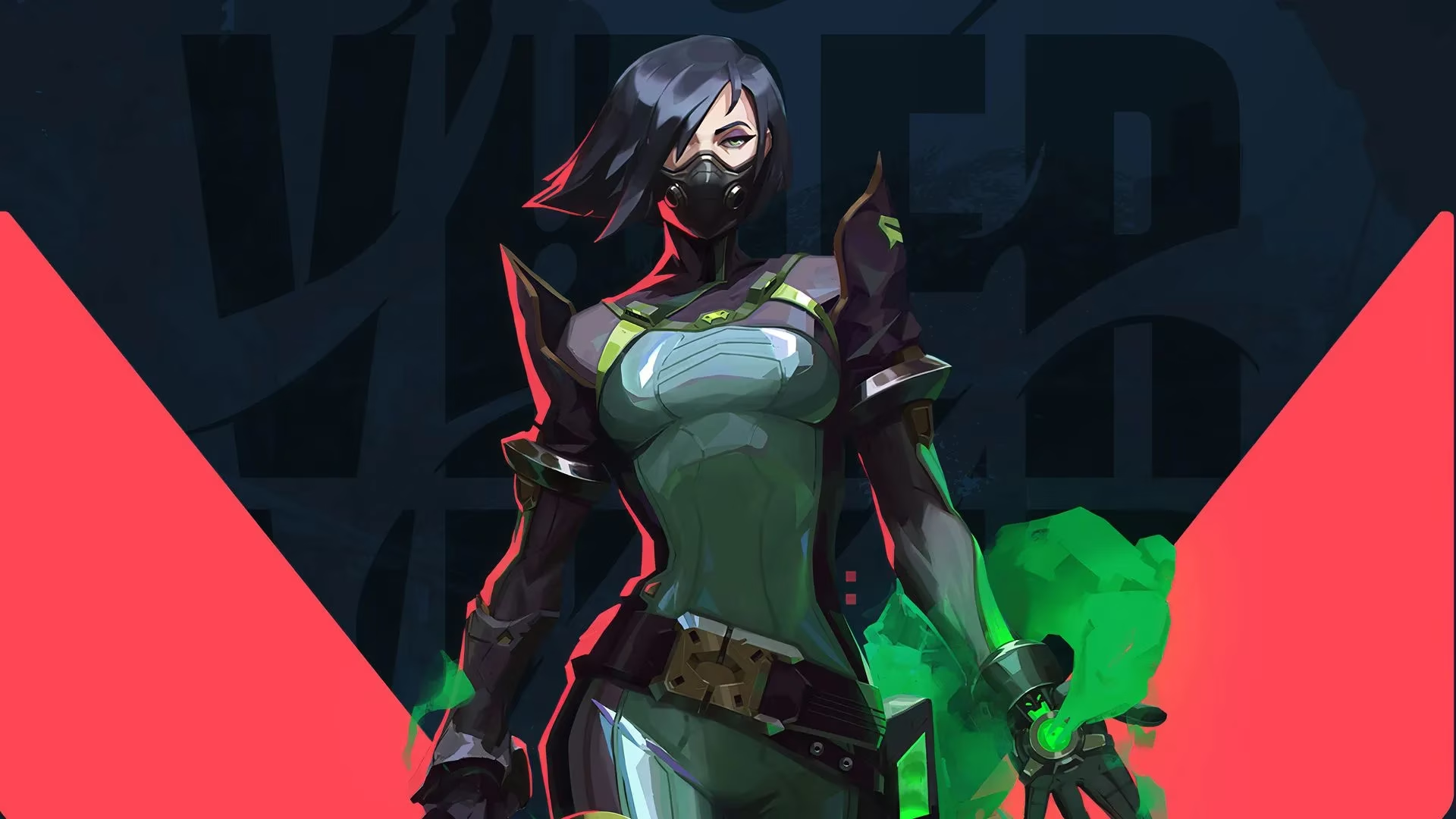
Vanguard wasn't just a bouncer at the door; it was a cosmic cartographer for Riot's Anticheat Data Engineer, Phillip Koskinas. In a move that felt less like a technical fix and more like a poetic act of creation, he spoke of locating "a VALORANT universe where there were 8873 less cheaters and moved us all into it." This wasn't merely banning accounts; this was a soul-ban. The punishment transcended a single username or a piece of hardware—it followed the player's essence. "If you've cheated before," the decree stated, "all your past, present, and future accounts will also be suspended." It was a judgment with the weight of finality, a digital scarlet letter. The system offered only a sliver of hope, a whisper of a second chance upon the game's full release, but made it clear: "this is the absolute limit of our mercy." For now, these soul-bans were confined to the Valorant realm, but the specter of them expanding to entire Riot accounts—or the even more severe Hardware Identification (HWID) bans—loomed, a shadow promising harsher reckonings.
Yet, as 2026 unfolds, the battle for Valorant's soul is fought on two fronts. While Vanguard hunts cheaters in the code, another, more human toxicity festers in the voice channels and text boxes. The game, for all its strategic brilliance, sometimes feels like it's got a bit of a... personality problem, you know? The early days of the beta were a cacophony of shouted orders—"Go to A!"—and worse. Female streamers, in particular, became reluctant archivists of this vitriol, sharing clips that painted a grim picture of the community's underbelly. Riot acknowledged this shadow, pledging to seek long-term solutions, understanding that a game's health is measured not just in banned cheaters but in the quality of the conversations between its players.
Despite these growing pains, or perhaps because of the fierce commitment to addressing them, Valorant' star has not dimmed. It has cemented itself as a titan of the streaming world. On platforms like Twitch, it has consistently commanded the attention of millions, a testament to its gripping, watchable gameplay. The journey from a closed beta guarded by Twitch Drops to a global, free-to-play phenomenon was swift. While its heart remains on PC, with no other platforms officially confirmed, its influence is undeniable.
The story of Valorant, then, is a dual narrative. It is the tale of a game world so fiercely protected that its architects will rewrite universes to purge corruption. It is also the story of a community learning to breathe, to grow beyond its initial toxic spasms. It stands as a monument to competitive design, a game that asks for both sharp aim and sharper minds, all while its guardians wage a silent war in the background and an audible one in the comms. The match is far from over, but the stakes for its soul have never been higher.
| Aspect | The Challenge | The Response |
|---|---|---|
| Integrity | Cheaters exploiting the system. | "Soul-bans" via Vanguard, targeting past/present/future accounts. |
| Community | Toxic behavior, especially targeting marginalized players. | Long-term behavioral systems under investigation by Riot. |
| Popularity | Maintaining player and viewer interest beyond initial hype. | Consistently top-viewed on streaming platforms; successful free-to-play model. |
Looking back from 2026, the closed beta feels like a distant, formative memory—a chaotic, vibrant, and sometimes painful adolescence for a game that would grow into a pillar of the esports world. The echoes of those first shouted calls to "Go to A!" are now part of its folklore, a reminder of where it started and how far it has come. The vigil continues, the game evolves, and millions still log in, seeking their perfect shot in a universe forever being cleansed and refined.
Comments