Valorant's Unreal Engine 5 Shift: What I Expect as a Player
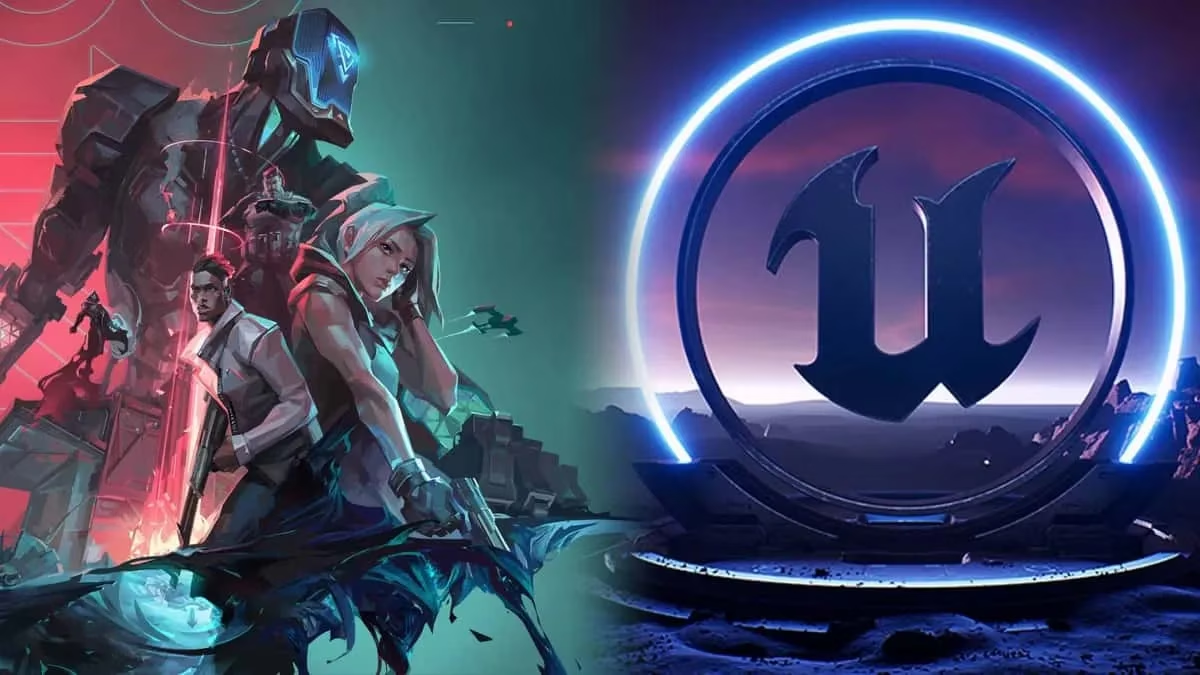
Valorant's Unreal Engine 5 transition is Riot's necessary engine swap, promising long-term flexibility without immediate gameplay or visual changes.
I have spent years grinding ranked queues, learning lineups, and arguing about eco discipline in Valorant, so when Riot confirmed the game is moving from Unreal Engine 4.27 to Unreal Engine 5, I paid attention. As of 2026, this is still one of the most interesting technical stories in tactical shooters, not because I expect Valorant to suddenly look like a cinematic blockbuster, but because the engine swap quietly reshapes what Riot can build next. At Unreal Fest 2024, Valorant Studio Head Anna Donlan was refreshingly honest about the game's visual identity: graphics-forward is not the first phrase most players would use. That honesty is exactly why I trust the reasoning behind the UE5 move more than the usual upgrade hype.
Why Riot is swapping engines
A game engine is the foundation under every mechanic, mode, and design experiment. Riot built Valorant on Unreal Engine 4, and according to Donlan, the team has squeezed literally everything it could get out of UE4. That matters to me as a player because it means the switch is not a vanity project. It is a necessary infrastructure move. UE5 was first shown in 2020 and released to developers in 2022, and by the time Valorant reached its fourth anniversary, the studio was already looking at what comes after UE4.27.
The console port is the clearest example of why engine flexibility matters. Donlan explained that Valorant's jump to console was made possible by UE4's existing console support. Riot had never launched a live-service game on console before, and the team did not want to build an entirely new division just to make the port happen. Unreal gave them tools to move faster. That same agility is the core benefit of UE5. I do not need a technical whitepaper to understand that: if the engine makes it easier for Riot to flex into new platforms and new ideas, the whole ecosystem benefits.
What will not change right away
This is the part I wish more players would internalize. Donlan said players should not notice any discernible differences in the moment-to-moment Valorant experience as the transition gets underway. She also said the upgrade is not going to significantly change how Valorant looks or performs, at least not right away. In other words, I should not expect my crosshair placement to feel different, my smoke timings to shift, or my favorite maps to get a sudden visual overhaul. The tactical core stays the tactical core.
| Area | Short-term expectation | Long-term possibility |
|---|---|---|
| Graphics | Minimal visible change | Gradual improvements years down the line |
| Performance | Stability is the priority | More headroom for ambitious content |
| Gameplay | Same moment-to-moment feel | New modes and experiments |
| Platform support | Console tools already proved useful | Broader flexibility for future releases |
That table sums up my own expectations. I would rather have a stable competitive shooter than a prettier one that loses its edge. Valorant's appeal has always been clarity, readable abilities, and crisp gunplay. UE5 should protect that foundation first and decorate it later.
The real prize is agility and future experiments
Donlan admitted she could not rattle off UE5 features that are transforming Valorant as we know it. Instead, she framed the move as necessary for broadening horizons. That line stuck with me because it points to the most exciting possibility: Riot is not just upgrading an engine, it is opening doors. She teased that developers might be working on something she cannot talk about, and that they might be thinking about ways to expand the Valorant universe into new playable experiences. That could mean full-fledged games, limited-time modes inside Valorant, or experiments in genres I have not considered yet.
As a player, I find that more compelling than a texture upgrade. I have watched live-service games stagnate when their technical foundation becomes a ceiling. Valorant has been remarkably consistent, but consistency can also become a rut if the team cannot prototype quickly. UE5 gives Riot room to test ideas without rebuilding everything from scratch. Maybe that means a new PvE experiment. Maybe it means a mode that plays with movement or economy in ways the current engine makes costly. Maybe it means nothing public for a long time. I am fine with that, as long as the competitive game stays sharp.
My player checklist for the UE5 era
Here is what I am watching for as the transition continues in 2026 and beyond:
-
🎯 No sudden gameplay drift. The feel of Valorant must stay intact.
-
🛠️ Performance stability first. I want fewer hitches, not flashier effects.
-
🧪 Smart experiments. Limited-time modes are the safest place for Riot to test UE5 ideas.
-
🖥️ Console parity. The console port proved the engine's flexibility, and I want that to continue.
-
🌍 Universe expansion. New playable experiences should feel like Valorant, not like a different game wearing its skin.
A 2026 perspective
From where I sit in 2026, the UE5 conversation has shifted from if to how. Riot has been clear that this is not a graphics-first move. It is a foundation-first move. That makes me cautiously optimistic. I have seen engine upgrades go wrong when studios promise the moon and deliver a slideshow. Valorant's team seems to understand that the moment-to-moment experience is sacred. If UE5 helps Riot prototype faster, support more platforms, and eventually expand the universe into new playable experiences, then the swap is worth it even if my screenshots look almost identical on day one. I will keep queuing, keep learning, and keep an eye on what those excited developers are quietly building.
Recent analysis comes from PC Gamer, whose reporting on engine transitions and live-service shooters supports the idea that Valorant's move to UE5 is less about immediate visual spectacle and more about long-term development flexibility, platform support, and the ability to test new modes without compromising the competitive clarity that defines Riot's tactical formula.
Comments