Valorant's Skill-Based Matchmaking: A Six-Year Journey From Controversy to Core Feature
Valorant skill-based matchmaking (SBMM) shapes both competitive and casual play, sparking debate over fairness and player enjoyment.
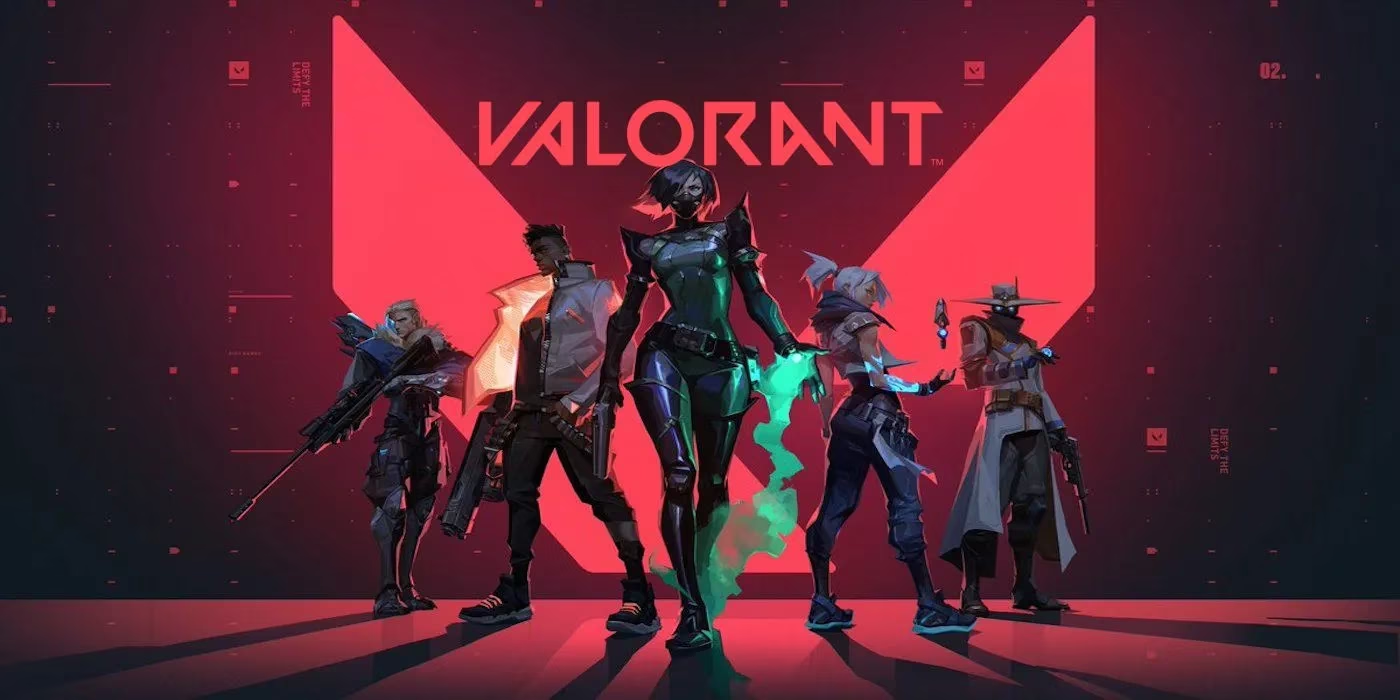
When Valorant was preparing for its explosive launch in the summer of 2020, few topics generated as much immediate debate as skill-based matchmaking — or SBMM. The conversation ignited when Game Director Joe Ziegler and Executive Producer Anna Donlon sat down with popular Twitch streamer Dr. Lupo for a candid interview about the game’s design philosophy. While they delved into agent balancing, map design, and the vision behind Riot Games’ first tactical shooter, one crucial question slipped through the cracks. It took a Twitter user named Qweets to ask the burning question afterward: does Valorant have SBMM? Ziegler’s reply was quick, blunt, and reverberated through the community. Yes, Valorant would feature skill-based matchmaking — not only in the ranked competitive mode, but also in the unranked playlist, which Riot called Unrated.
The revelation surprised many. At its core, SBMM is a system that sorts players into matches based on a hidden skill rating, ensuring that everyone in a lobby operates at a similar level. Someone who consistently dominates their games will find themselves facing increasingly formidable opponents, while those who struggle get gentler lobbies. The goal is to protect the casual majority — the players who log in occasionally, not daily — from the frustration of being repeatedly steamrolled. In theory, it makes every match feel winnable and every loss a learning opportunity rather than a hopeless stomp.
But that protective blanket came with a sharp edge. For high-frequency players, streamers, and anyone who enjoyed relaxing in public matches without the pressure of competitive ranking, the Unrated playlist suddenly lost its appeal. Because SBMM permeated every corner of the game at launch, there was no true “chill” mode. A player who performed well in ranked would immediately face similarly skilled opponents in Unrated, transforming every match into a sweaty, high-stakes affair. This dynamic sparked an enduring tension that would simmer for years: casual protection versus hardcore burnout.
As Valorant moved through its first year, the SBMM debate mirrored wider industry conversations. Critics pointed to other titles, claiming SBMM had eroded fun and fractured communities. Yet Riot Games stood firm. Developers believed that protecting casual players was not only ethical but essential for the long-term health of the game. Casual players represent the silent majority — the ones who buy battle passes, recommend the game to friends, and keep queue times short. Without SBMM, every low-skill lobby risked invasion by a single high-tier player, spoiling the experience for nine others. For every vocal streamer who demanded a casual playlist free of SBMM, there were dozens of unseen players who quietly appreciated not being farmed for highlight reels.
By 2022, the conversation matured. Riot began introducing subtle adjustments to the matchmaking algorithm, tightening the skill brackets in ranked while slightly loosening them in Unrated — but never abandoning SBMM entirely. They also added new game modes: Spike Rush, Escalation, and eventually Team Deathmatch. Some of these modes carried a relaxed version of SBMM, while others experimented with wider skill variance. The community learned to accept that SBMM was here to stay, even as they continued to hope for a dedicated “unranked no-SBMM” queue — a hope that remains unfulfilled at the time of writing in 2026.
Looking back, it is clear that SBMM shaped not only the player experience but also the culture of Valorant. Content creators adapted by focusing on educational content, coaching, and high-rank gameplay rather than pub-stomping montages. The ranked climb itself became the central narrative, with the Unrated mode serving as a warm-up ground rather than a playground. New players, in turn, benefitted from a gentler onboarding experience, which contributed to Valorant’s impressive staying power in a saturated market.
In 2026, the SBMM system is more refined. Riot now uses a combination of performance metrics — not just win/loss ratios — to estimate skill, including ability usage efficiency, economic impact, and clutch performance. This deeper analysis allows the matchmaker to place players more accurately, reducing the frequency of those dreaded one-sided games. Yet the philosophical divide remains. The desire for effortless fun still clashes with the algorithm’s mandate to balance. Riot continues to gather data and survey players, leaving the door open for future changes. One thing is certain: as long as Valorant exists, SBMM will be a defining feature, simultaneously praised and criticized, but ultimately inseparable from the game’s identity as a competitive, community-driven shooter.
Comments