VALORANT's Meteoric Rise and the Evolving Landscape of Esports Viewership in 2026
VALORANT's masterful launch strategy leveraged a Twitch-integrated closed beta, creating an unprecedented hype wave and viewership frenzy that redefined tactical FPS marketing during the pandemic.
In the summer of 2020, the gaming world witnessed a masterclass in launch strategy. Riot Games, a titan in the competitive scene, unleashed VALORANT onto the tactical FPS genre. Leveraging a closed beta that was as much a marketing spectacle as a technical test, the company distributed access keys exclusively through Twitch streams. 🎮 This ingenious move created a frenzy, turning the streaming platform into a digital queue where viewership numbers shattered records. For a brief, heady moment, VALORANT was not just a game; it was the only game, a beacon of hype promising to redefine the genre. The pandemic's isolating grip only amplified this digital congregation, making the closed beta's opening week a phenomenon unlikely to be repeated.
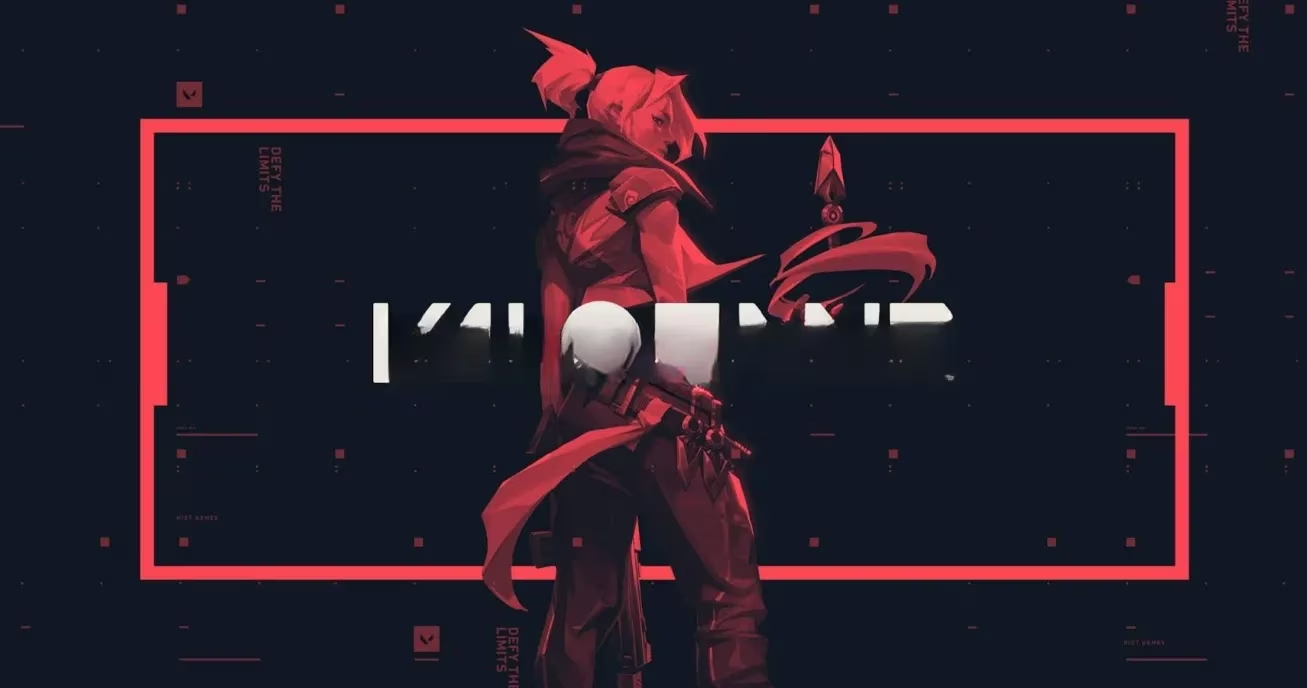
Fast forward to its official launch, and the narrative began to shift. While the game launched with strong reviews, capitalizing on the polished foundation laid during the beta, the viewership tsunami had receded. It was a predictable comedown from impossible heights, but the drop was more pronounced than many anticipated. The game, once a permanent fixture at the top of Twitch's "Most Watched" charts, began to slip. A roster of big-name streamers who had championed the beta moved on to other titles, their initial fervor cooled. The question echoing through forums and industry reports was simple: had the hype been a flash in the pan?
The Post-Launch Reality: Finding a Footing
The initial surge, driven by novelty and exclusive access, was always unsustainable. The real test was whether VALORANT could build a lasting community. The data suggested it was doing just that, albeit on a more modest scale than its explosive debut implied. The game settled into a comfortable niche, boasting a dedicated, competitive player base and a structured esports ecosystem that grew steadily. Riot's consistent content pipeline—introducing new, dynamic Agents and meticulously designed maps—ensured the meta remained fresh and engaging. However, in the broader landscape of streaming viewership, it consistently found itself outside the weekly top five, often overshadowed by legacy titles and new viral sensations.
Key factors in this normalization included:
-
The End of Scarcity: The closed beta's key-drop mechanism was a powerful motivator. Once the game was freely available, that specific viewership driver vanished.
-
Streamer Migration: The content creator economy thrives on novelty. Many streamers returned to their "home" games (League of Legends, Counter-Strike, variety streaming) once the initial wave of VALORANT content crested.
-
A Crowded Market: The tactical shooter space is fiercely competitive. Retaining players and viewers requires constant innovation and a flawless competitive experience.
The 2026 Perspective: A Pillar of Esports
Looking back from 2026, the early concerns about VALORANT's viewership seem like growing pains. The game did not become the singular, genre-dominating "game changer" some predicted from its beta frenzy. Instead, it evolved into something perhaps more valuable: a resilient pillar of the global esports infrastructure. 🏆 Its journey mirrors the maturation of the industry itself, where sustainable growth and competitive integrity often trump viral, fleeting popularity.
The esports scene for VALORANT is now a cornerstone of the competitive calendar. International tournaments like the Champions event draw millions of viewers, showcasing a level of strategic depth and mechanical skill that continues to captivate audiences. The game's core appeal—precise gunplay meets character-based abilities—has proven to be a durable formula. While its daily Twitch numbers may not always top the charts, its event viewership demonstrates a powerful, engaged fanbase that tunes in for high-stakes competition.
Lessons from the Hype Cycle
The story of VALORANT's launch offers critical lessons for the gaming industry in 2026:
| Phase | Characteristic | Outcome for VALORANT |
|---|---|---|
| Beta Hype | Artificial scarcity, influencer frenzy | Record-breaking, unsustainable viewership peak |
| Launch Correction | Normalization of access, streamer migration | Significant drop, perceived "decline" |
| Long-Term Evolution | Consistent content, esports investment | Stable, dedicated community & major esport status |
-
Hype is a Launch Vehicle, Not a Foundation: A spectacular beta can put a game on the map, but long-term success is built on post-launch support and community trust.
-
Esports is a Marathon: Building a credible competitive scene takes years of investment and careful nurturing. VALORANT's structured league system, now a hallmark of its success, was a long-term bet that paid off.
-
The Community is the Core: By listening to player feedback and steadily refining balance and anti-cheat measures, Riot fostered a sense of ownership and loyalty that transient viewers from 2020 lacked.
In conclusion, VALORANT's journey from a Twitch-centric hype phenomenon to a respected esports titan is a defining narrative of modern gaming. It proved that a game could survive the intense scrutiny following a supernova launch and thrive by focusing on quality, competition, and community. The initial viewership numbers, in hindsight, were merely the first loud chapter in a much longer, and ultimately more successful, story. The game found its true level—not as a fleeting obsession, but as a lasting legacy in the tactical FPS pantheon. Its servers remain full, its tournaments prestigious, and its place in the industry, secure. ✅
Comments