Valorant's Esports Journey: From Ignition Series to 2026 Global Domination
Valorant esports and the Ignition Series have evolved into a global phenomenon, captivating fans with thrilling tournaments and innovative growth strategies.
Hey everyone, it's your resident esports nerd coming at you from the future! Looking back from 2026, it's wild to see how far Valorant has come. Remember the early days in 2020? The game had just launched, and Riot was rolling out its first competitive initiative, the Ignition Series. Fast forward to today, and Valorant isn't just a game; it's a global esports phenomenon. Let me take you on a trip down memory lane and show you how we got here.
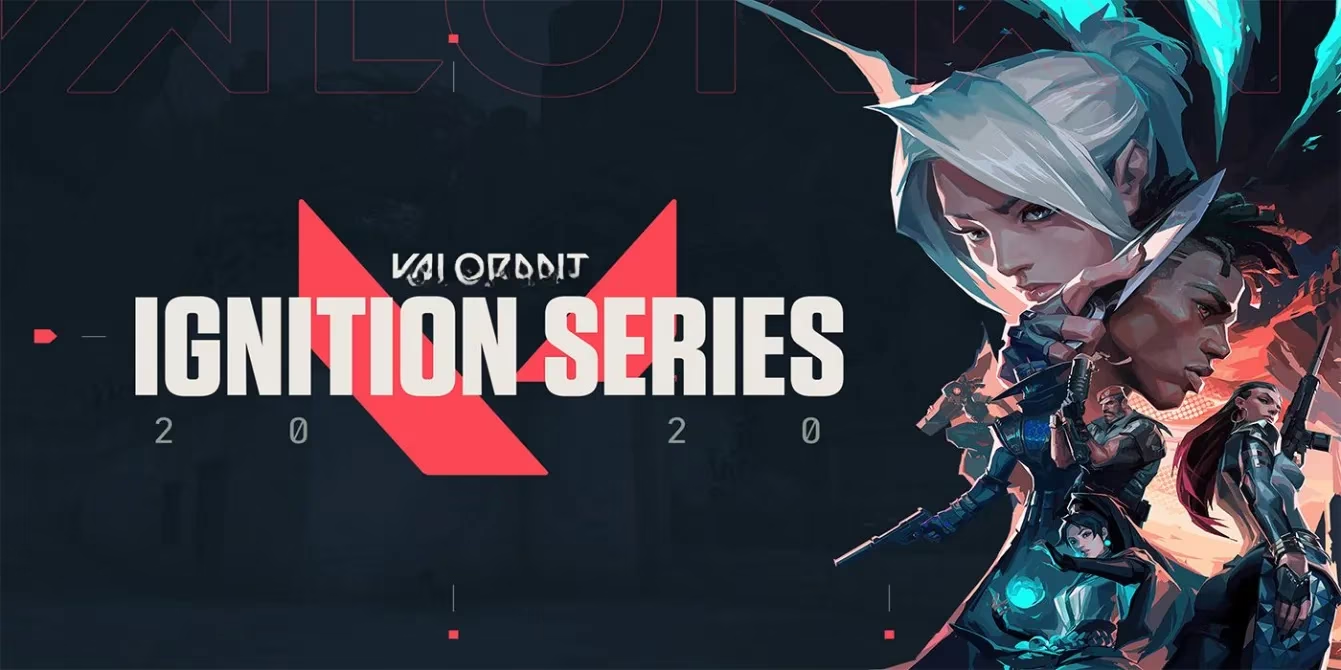
Man, the launch period was a rollercoaster. I vividly remember the hype during the closed beta—Twitch was absolutely flooded with streams! But then, post-launch, things got... rocky. The viewer numbers took a nosedive, and the community was super divided. There was this whole wave of review bombing from the CS:GO camp, with people dismissing Valorant as just a 'clone.' It felt like the game needed something big to prove itself. And that's exactly what Riot did with the Ignition Series. They didn't wait around; they announced these partnered tournaments almost immediately. The first one was the G2 Valorant Invitational on June 19th, 2020. Man, watching those early tournaments felt so raw and exciting. It was like witnessing the birth of something new.
What really struck me back then was Riot's strategy. Unlike League of Legends with its fully owned leagues like the LCS, or Overwatch with its city-based franchise league, Riot took a different path for Valorant. They partnered with existing esports organizers from the get-go. At first, I thought, 'Huh, that's interesting.' But now, in 2026, it makes perfect sense. That move was genius! It wasn't about building a walled garden; it was about fostering grassroots growth and making competitive play accessible to everyone, everywhere. They were planting seeds globally instead of trying to control the whole forest. This approach let regional scenes develop their own unique flavors and rivalries, which is a huge part of why the game feels so vibrant today.
Of course, there were some growing pains. I have to laugh thinking about it now—the competitive scene was literally starting before the game even had a proper ranked mode! The built-in ranked play didn't go live until a week after those first Ignition Series events. Talk about putting the cart before the horse! But in a weird way, it worked. It created this incredible energy where pros and amateurs were figuring out the meta together in these early tournaments. Everyone was on a somewhat level playing field, scrambling to master the blend of tactical gunplay and magical abilities that Riot designed specifically with esports in mind.
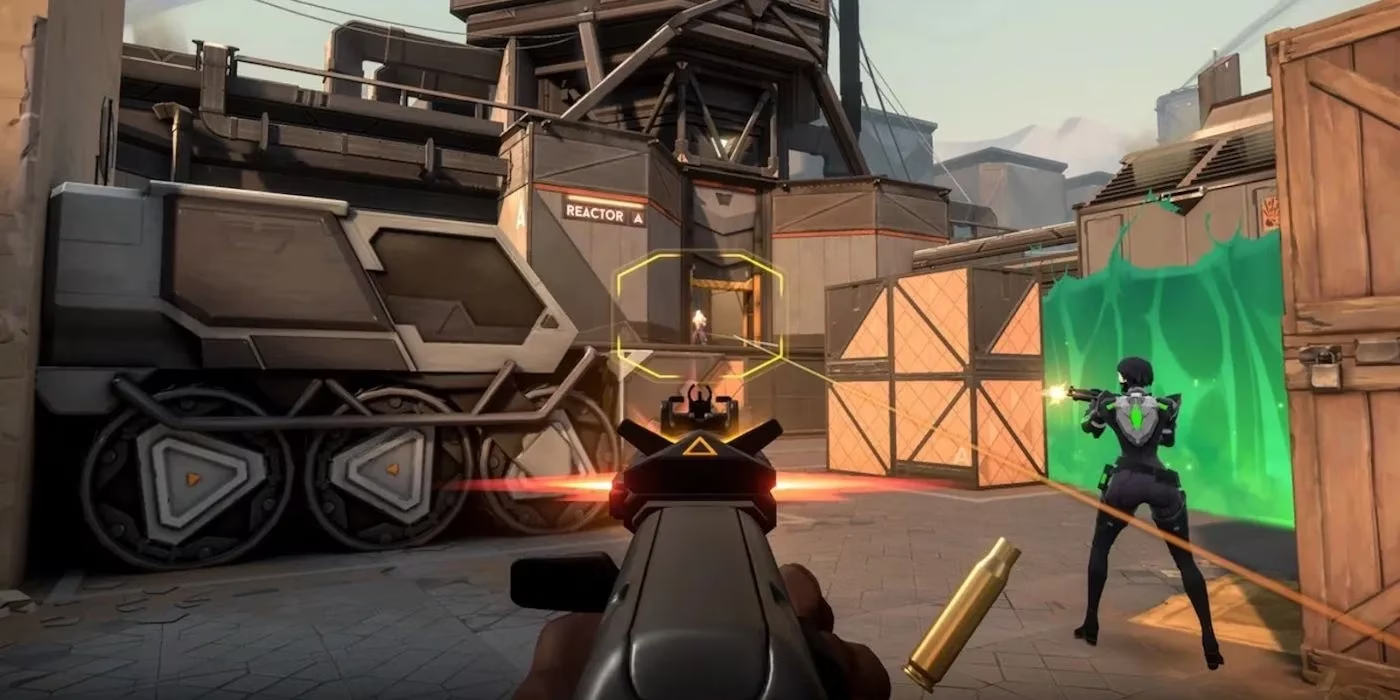
Let's fast-forward through the history books to where we are now in 2026. The Ignition Series was just the spark. Here’s how the ecosystem evolved:
-
2021-2022: The VCT Era Begins. The Valorant Champions Tour (VCT) structure was established, creating a clear path from open qualifiers to international Masters events and the crown jewel: Champions. This gave the grassroots scene that the Ignition Series nurtured a proper destination.
-
2023-2024: Partnership Leagues & Global Expansion. Riot introduced the partnership team model for top-tier leagues in Americas, EMEA, and Pacific. This stabilized the pro scene while still allowing for challenger circuits and promotion/relegation drama. The game's presence exploded in regions like Brazil, LATAM, and Southeast Asia.
-
2025-Present (2026): A Cultural Staple. Valorant esports isn't just about the competition anymore. It's about the stories, the personalities, and the insane plays that break the internet. The meta has evolved light-years beyond those early days, with agent compositions and strategies being more complex and beautiful than ever.
Reflecting on it all, the Ignition Series was more than just a few tournaments; it was a statement of intent. It was Riot saying, 'We believe in this game, and we believe in you, the community, to help build it with us.' That initial strategy of accessibility and partnership set the tone for everything that followed. From a game that some called a 'clone' facing review bombs, to a titan of the esports world with millions of fans—what a journey it's been. And the best part? It still feels like it's just getting started. The level of play keeps rising, the stories keep getting better, and I, for one, can't wait to see what the next chapter holds. If you're new to Valorant now in 2026, just know you're jumping into one of the richest competitive landscapes in gaming history. See you on the server! 😎
Comments