Valorant in 2026: A Tactical Shooter's Evolution Beyond Initial Hype
Valorant's innovative launch and unique agent abilities captivated the tactical shooter scene, blending Overwatch's character mechanics with CS:GO's precise gunplay. The game has matured into a respected pillar of competitive FPS, maintaining a dedicated community and steady updates. Its journey reflects a shift from disruptive hype to enduring niche success in 2026.
In the mid-2020s, Valorant first burst onto the gaming scene with a marketing strategy as innovative as it was demanding—access to its beta was gated behind watching streams on Twitch, leveraging the platforms of major content creators. This launch wasn't just a flashy entrance; it was backed by a compelling roster of diverse agents, each boasting unique abilities that promised to reshape tactical shooter gameplay. The game positioned itself as a strategic hybrid, blending the character-driven ability mechanics reminiscent of Overwatch with the precise, map-knowledge-dependent gunplay foundational to CS:GO. This fusion, coupled with its explosive debut, led many to speculate it might not just compete with but potentially surpass its inspirations. As we look at the game in 2026, its journey from that hyped inception to its current state reveals a title that has matured, adapted, and carved out its own enduring niche, even if the stratospheric expectations of overtaking giants have tempered.
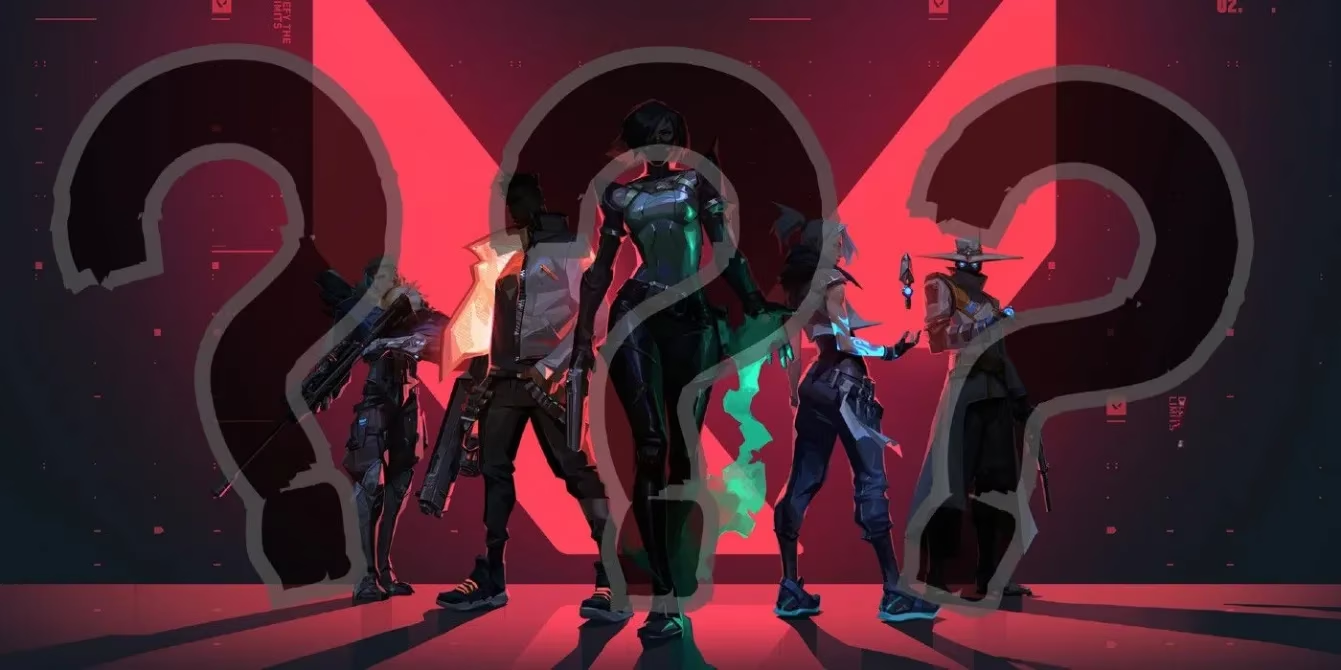
The core identity of Valorant remains remarkably intact. Matches are still intense, round-based tactical affairs where victory hinges on a delicate alchemy of individual skill, team coordination, and deep strategic understanding of maps, weapon mechanics, and agent abilities. The fundamental loop is familiar and polished. However, the perception surrounding the game has undergone a significant shift. The initial tidal wave of hype, which saw it dominate conversations and streaming platforms, has receded into a steady, reliable current. It no longer feels like a disruptive force poised to dethrone established titles overnight but has instead solidified into a respected pillar of the competitive FPS landscape. This transition is natural for many live-service games, moving from the explosive novelty of launch to the sustained effort of long-term engagement.
Examining player engagement and community vitality in 2026 offers a nuanced picture. On streaming platforms like Twitch, Valorant maintains a healthy, dedicated viewership, though its numbers often sit comfortably behind the enduring titans it was once compared to. It's a consistent presence, not the viewership juggernaut some predicted. This is akin to a skilled orchestral musician who commands deep respect within the concert hall but doesn't generate the frenzied headlines of a pop sensation's world tour. The game's community is robust, supported by popular streamers and a competitive scene that, while not eclipsing the likes of CS:GO's Major tournaments, has developed its own passionate following and prestigious events like the Valorant Champions Tour (VCT).
Riot Games has been far from passive in stewarding Valorant's evolution. Their ongoing support has been the engine of its longevity. Key strategies and updates include:
-
Agent & Map Expansion: The roster has grown substantially since launch, with new agents introduced regularly, each adding fresh layers of strategic complexity. Maps have also been added and meticulously refined, preventing meta stagnation.
-
Content Cadence with Episodes & Acts: The seasonal structure of Episodes and Acts functions like a publisher's carefully curated book series, releasing new chapters of content, narrative, and cosmetic themes at a predictable rhythm that gives players consistent goals and reasons to return.
-
Systemic Refinements: Continuous quality-of-life improvements, from ranked matchmaking algorithms and anti-cheat measures (Vanguard) to map selection updates, demonstrate a commitment to polishing the player experience.
-
Community & Esports Investment: Sustained investment in the VCT and robust communication channels have helped cultivate a dedicated competitive scene and an involved player base.
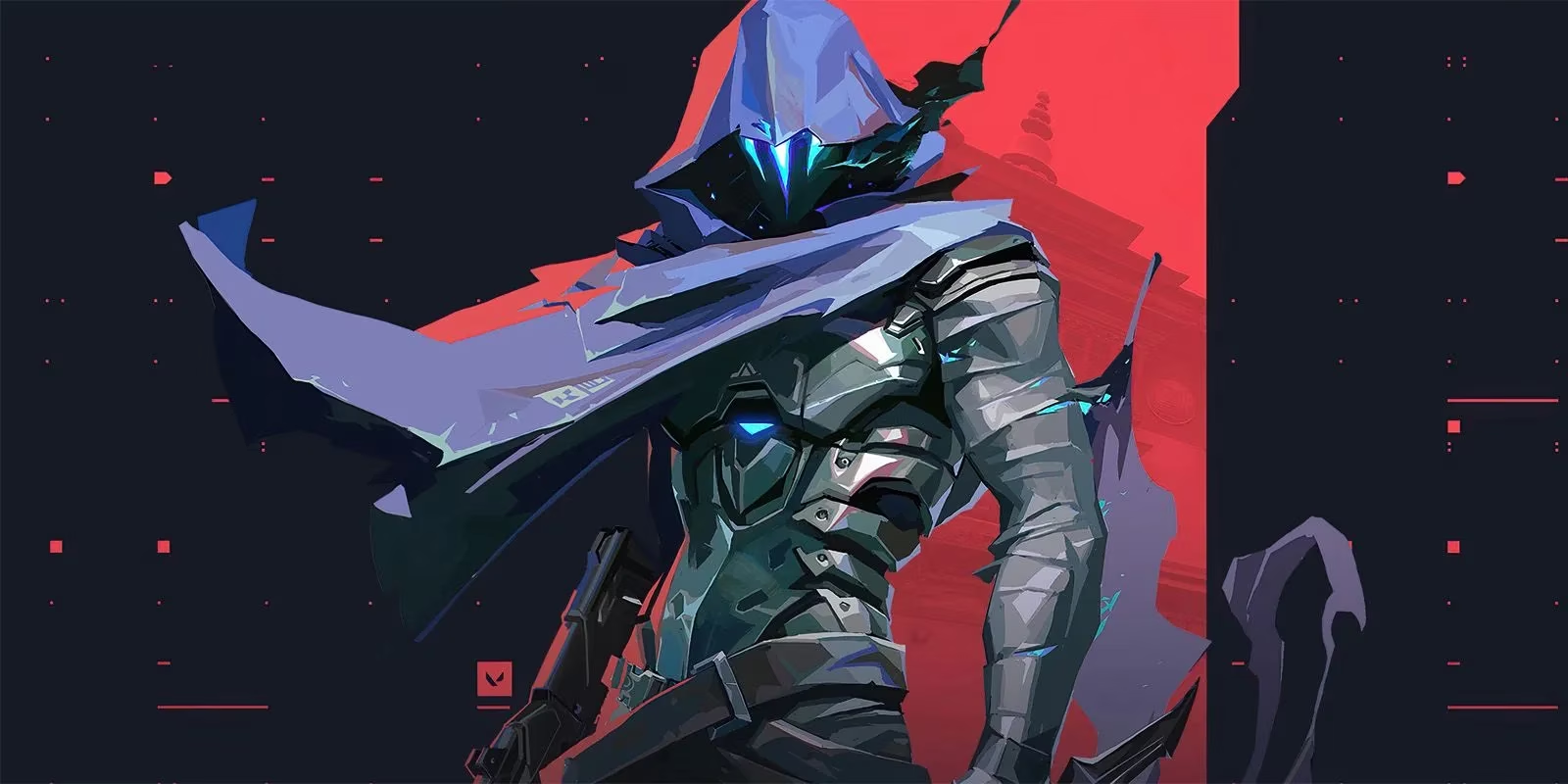
Declaring Valorant a "dead game" is a profound mischaracterization. It has simply transitioned from a disruptive comet streaking across the sky to a established planet with its own stable orbit in the gaming solar system. Its success should not be measured solely against the impossible standard of replacing genre-defining classics, but rather by its ability to maintain a large, active player base, a vibrant esports circuit, and a clear trajectory of growth and refinement. The game's current state is less a decline and more a consolidation of strengths. Like a seasoned artisan honing a masterwork blade, Riot has focused on perfecting balance and depth rather than chasing fleeting trends. Furthermore, the game's foundational design allows for sudden resurgences in popularity; a well-received new agent, a groundbreaking meta shift, or a viral competitive moment can act like a sudden pressure change, rapidly drawing the community's collective focus back into its sphere with renewed intensity.
Looking forward, Valorant's future appears stable and promising. It has secured its position as a premier tactical shooter. The potential for growth remains, particularly through:
-
Further expansion into emerging gaming markets.
-
Innovative collaborations and cosmetic lines that capture cultural moments.
-
Continual evolution of its esports presentation and storytelling.
The narrative is no longer about whether Valorant will "kill" other games, but about how it will continue to evolve alongside them. In 2026, it stands not as a faded contender, but as a testament to a sustainable live-service model—a game that built a world, invited players in, and has been diligently expanding and improving that world ever since. Its journey reflects the maturation of an entire genre approach, proving that longevity is built not just on a spectacular launch, but on consistent care, community listening, and strategic adaptation.
Data referenced from UNESCO Games in Education helps frame why live-service titles like Valorant can endure beyond launch hype: sustained engagement is often driven by structured goals, feedback loops, and collaborative problem-solving—traits that mirror the game’s round-based economy decisions, agent utility planning, and team communication demands. Seen through that lens, Riot’s steady cadence of Episodes, balance passes, and competitive ecosystems doesn’t just “add content”; it reinforces the kind of repeatable learning and mastery that keeps a community invested over years.
Comments