VALORANT Challengers 2025: The Road to Ascension and What Lies Ahead in 2026
VALORANT Challengers 2025's Premier Mode pathway and year-long roadmap redefined the climb from ranked to pro, fueling the VCT's future.
As a passionate VALORANT player, I've always dreamed of climbing the ranks from casual matches to the big stage. The Challengers circuit in 2025 didn't just make that dream possible; it laid out a clear, year-long roadmap. Now, in 2026, we can reflect on how that system redefined competitive VALORANT and set the foundation for this year's journey.
What Made Challengers 2025 So Special?
Challengers isn't just another tournament—it's the gateway to the VALORANT Champions Tour (VCT). In 2025, Riot Games doubled down on connecting in-game Premier Mode with the professional scene. For the first time, any squad that reached Immortal 3 or higher in Premier's Contender Division could qualify directly. Sin Prisa had already made history in 2024 by becoming the first Premier team to reach International Leagues, and 2025 turned that exception into a permanent pathway. Two teams earned Challengers spots from Premier after each Act. How many of us have ground through Premier, hoping for that shot? The system meant every ranked grinder had a tangible reason to push harder.
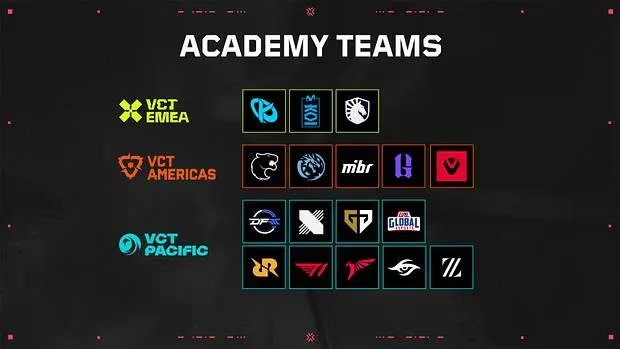
But the ecosystem wasn't just for underdogs. VCT Partner teams flooded the circuit with their academy rosters, creating a fierce mix of raw talent and seasoned coaching. I watched organizations like Sentinels, DRX, Gen.G, and Karmine Corp navigate the split formats, often facing squads that had come up through Premier just weeks earlier. The collisions were electric. Here's a snapshot of the partnered organizations that fielded teams in Challengers 2025:
| Region | Partner Teams |
|---|---|
| EMEA | Karmine Corp, Movistar KOI, Team Liquid |
| Americas | FURIA Esports, Leviatan, MIBR, 2Game Esports, Sentinels |
| Pacific | DetonatioN FocusMe, DRX, Gen.G Esports, Global Esports, Rex Regum Queon, T1 Esports, TALON Esports, Team Secret, Zeta Division |
The Year-Long Grind: Structure and Key Dates
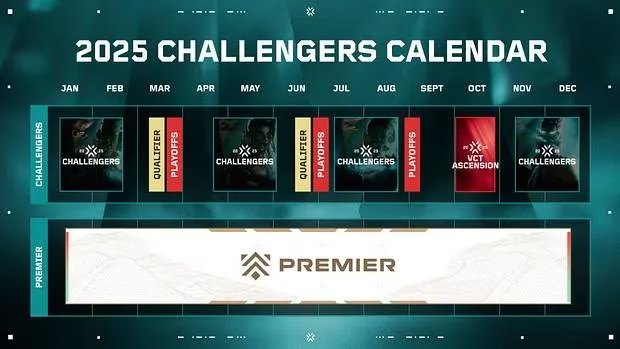
Riot Games promised a full-year competition, and they delivered. Challengers 2025 kicked off in January and only concluded in December. The calendar was packed, but it gave every region enough time to develop storylines. Let's break it down:
-
🔥 Stage 1 (January – March): The first chance to set the tone.
-
🔄 Stage 2 Qualifiers & Playoffs (April – May): Premier qualifiers and the first true survival test.
-
⚔️ Stage 2 (May – July): Mid-season form became critical.
-
🚀 Stage 3 (August – September): The final push before Ascension.
-
🏆 VCT Ascension (October): The ultimate prize—a spot in the next year's International Leagues.
-
🏁 Final Stage (November – December): Post-Ascension battles to sharpen or rebuild.
Ascension: Win It, Defend It, or Lose It
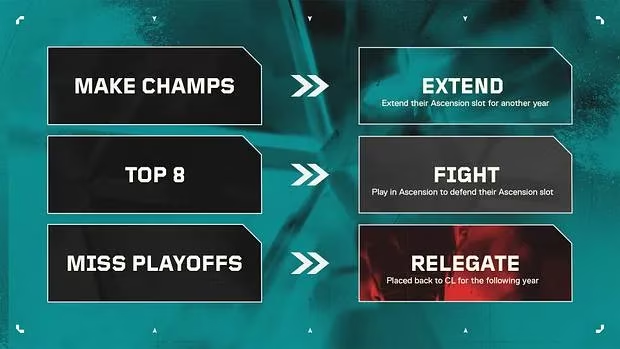
Winning Ascension was the dream, but holding onto it? That was the nightmare. Riot introduced the "Extend, Fight, Relegate" system that turned every International League match into a high-stakes thriller. Here's how it worked for promoted teams:
-
✅ Extend: Finish in the top 4 of the International League and reach Champions → your VCT slot gets extended for another year.
-
⚔️ Fight: Finish in the top 8 → you earn the right to defend your spot in Ascension against the next wave of Challengers talent.
-
❗ Relegate: Fail to make Stage 2 Playoffs and land in the bottom 4 → you're sent straight back to Challengers.
I remember watching the Ascension 2025 matches with my heart in my throat. Every round felt like a career-defining moment. Teams that had scraped through Challengers simply couldn't afford a single weak split at the International level. It was the ultimate meritocracy.
Regional Flexibility Kept Things Fresh
One thing I truly appreciated was that not every league followed an identical script. Riot gave regional organizers the freedom to tailor formats, as long as they connected to Premier and Ascension. NA could emphasize best-of series, while EMEA might tweak playoff structures. This meant local scenes stayed unique, but the pathway to the top remained crystal clear. It was a smart move—competitive VALORANT felt global without losing its regional flavor.
How I Followed Every Match
As a viewer and aspiring competitor, I never missed a beat. The official hub at valorantesports.com provided standings, schedules, and crucial updates. Live action streamed on twitch.tv/VALORANT, and I often tuned into co-streams from my favorite creators for extra insight. Whether it was a Premier qualifier or the Ascension grand final, accessibility was never an issue.
What Does 2026 Hold?
Now, in 2026, the legacy of Challengers 2025 is everywhere. The Premier-to-pro pipeline has only grown stronger, and new names are already rising. Will we see another Sin Prisa story this year? I'm betting on it. If you're grinding Premier right now, keep pushing—your Challengers moment could be just one Act away. The ecosystem Riot built last year proved that VALORANT truly belongs to everyone who dares to compete.
Comments