The Unseen Architects of Chaos: A History of Valorant's Most Defining Nerfs
Valorant nerfs and weapon adjustments have dramatically reshaped the meta, balancing gameplay and rewarding skillful tactics for players.
In the grand, ever-evolving theater of Valorant, where digital warriors clash with spells and steel, the architects of balance at Riot Games have wielded their tools with surgical precision and, at times, the force of a sledgehammer. By 2026, the landscape of the game is a palimpsest, a manuscript written over countless times, where each major erasure and rewrite tells a story of a meta pushed too far, a strategy too dominant, and the necessary, often painful, corrections that followed. These nerfs are not mere patches; they are seismic events that have reshaped continents of strategy, forcing players to navigate new, unfamiliar terrains. They are the quiet, unseen hands that have sculpted the game's history, turning overpowered phenomena into balanced components of a complex ecosystem.
The Genesis of Change: Raze's Controlled Demolition
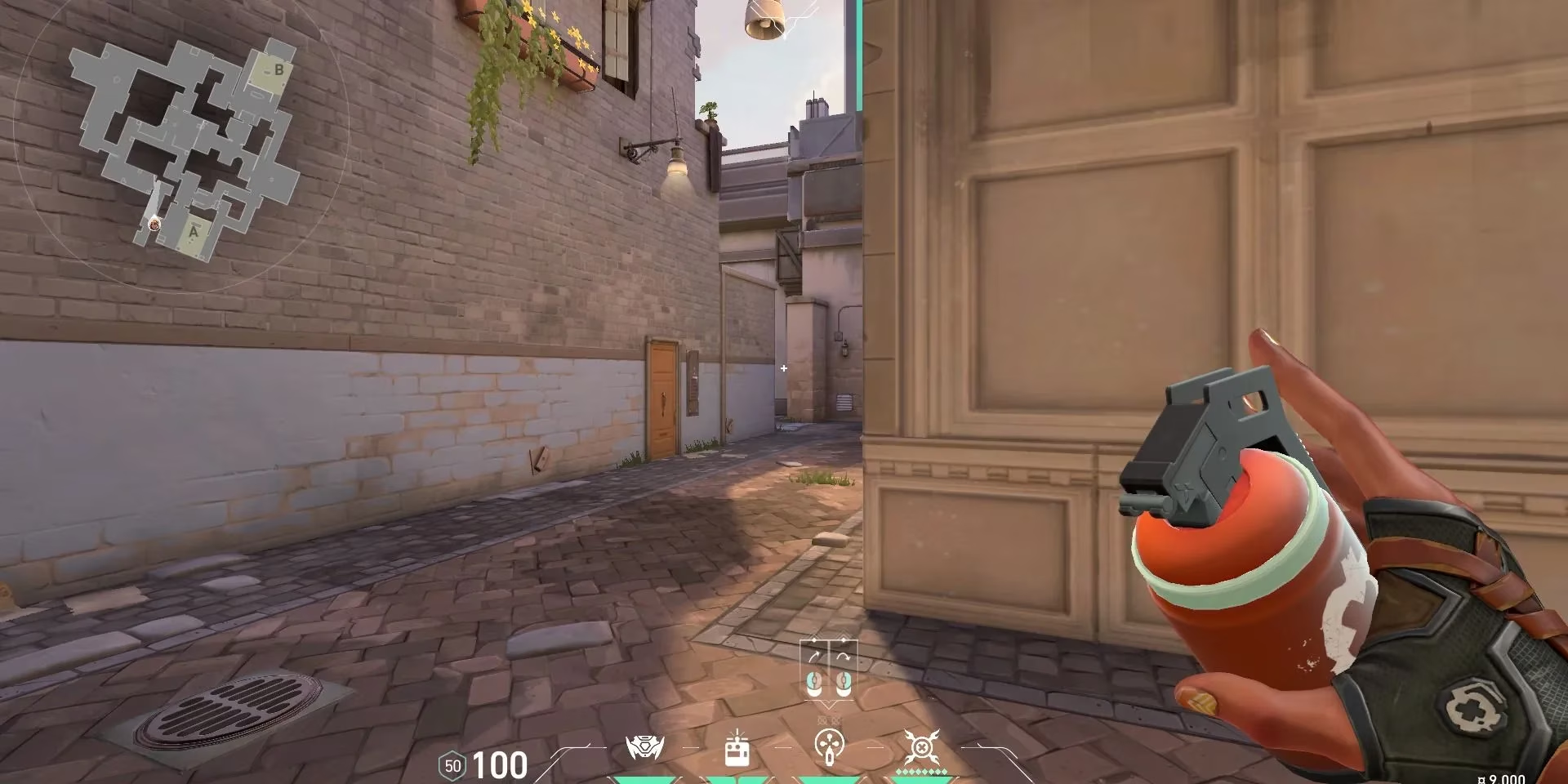
In the primordial days of Valorant, Raze's Paint Shells were like twin supernovas detonating in every confined space, their shockwaves rewriting the rules of engagement with indiscriminate force. The initial nerf, reducing her grenade count from two to one, was the first major act of containment. Yet, Riot's design was clever—it wasn't a simple disarmament. By allowing the charge to recharge upon securing two kills, they transformed the ability from a mindless area-denial tool into a high-stakes reward for skillful aggression. This change was a masterclass in game design, akin to teaching a wildfire to only burn the deadwood. It established a principle that would echo through future updates: the best nerfs don't just remove power; they recontextualize it, making it a prize for mastery rather than a default state.
The Great Equalizers: Weapon Adjustments That Redefined Fundamentals
The humble Classic pistol's alternate fire mode was, for a time, a pocket-sized revolution that broke the laws of physics. Its lack of a meaningful movement inaccuracy penalty allowed players to become acrobatic assassins, turning jump shots into deadly certainties. The 3.09 patch finally anchored this floating menace, drastically increasing its firing errors while moving. This change forced the shotgun blast back into its intended role as a close-quarters gamble, a tool as precise and close-ranged as a surgeon's scalpel, not a scattergun wielded from the sky.
Perhaps no weapon adjustment resonated through every tier of play quite like the 2023 rifle ammo nerf. The meta had grown stagnant, a symphony of endless spray through smokes. By slashing the Vandal's reserve from 75 to 50 bullets and the Phantom's from 90 to 60, Riot didn't just tweak numbers; they installed a governor on chaos. Players were suddenly forced to treat every bullet like a precious resource, transforming mindless spam into calculated bursts. It was a change that demanded discipline, turning the rifle duel from a test of spray control into a complex dance of ammo economy and precision.
Key Weapon Nerfs at a Glance:
| Weapon/Item | Pre-Nerf State | Post-Nerf State (Key Patch) | Impact |
|---|---|---|---|
| Classic (Alt-fire) | Low moving inaccuracy | High jump/run inaccuracy (Patch 3.09) | Curbed jump-shot dominance |
| Shorty | 150 credits, 10 reserve ammo | 300 credits, 6 reserve ammo (Various) | Removed from pistol round meta |
| Vandal Reserve | 75 bullets | 50 bullets (2023) | Limited spam-through-smoke |
| Phantom Reserve | 90 bullets | 60 bullets (2023) | Limited spam-through-smoke |
The Controller's Constellation Dimmed: Astra's Fall from Grace
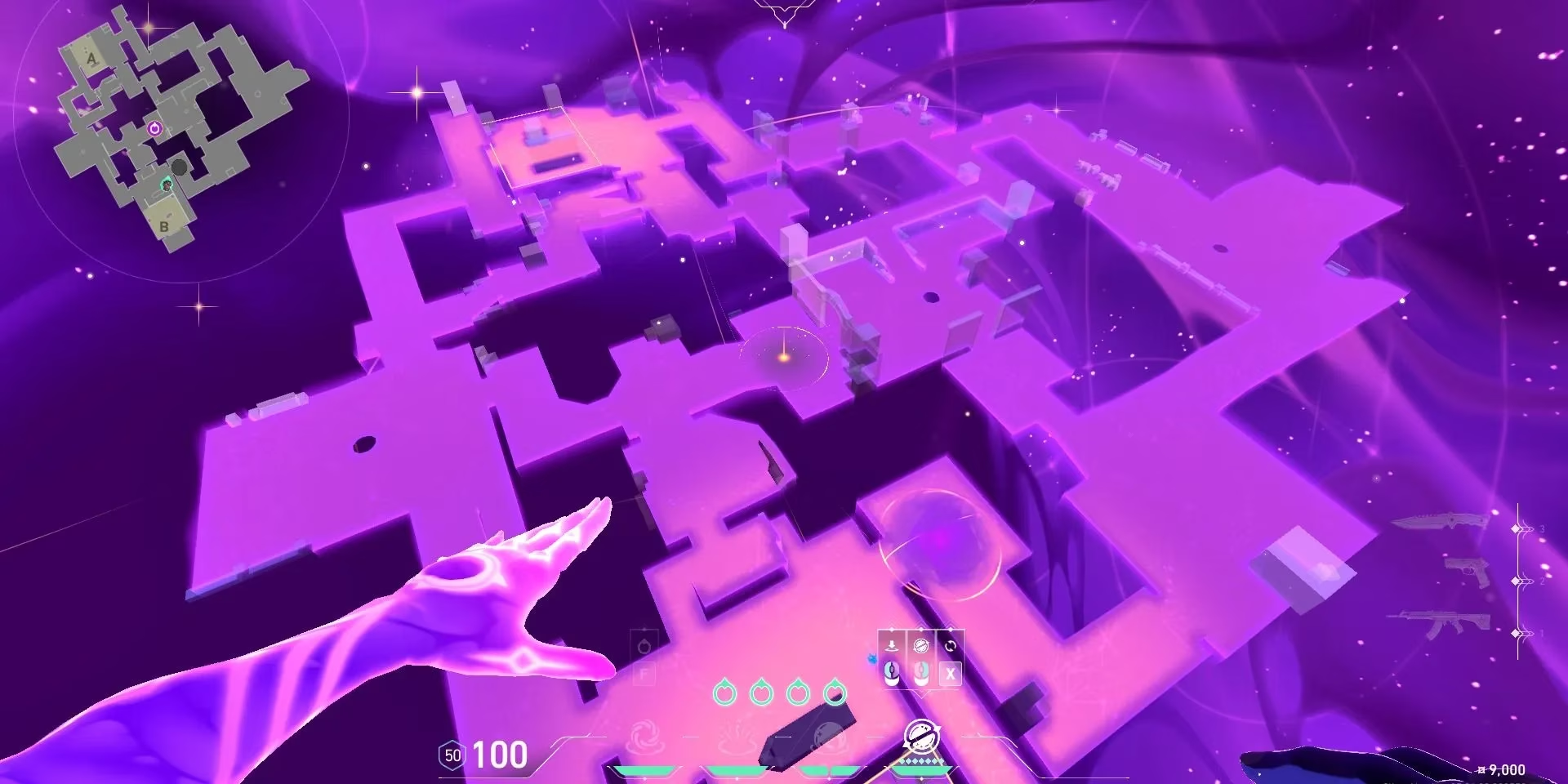
Astra was the grandmaster of the cosmos, her influence stretching across the map with the effortless grace of a celestial body dictating orbits. Her kit was a symphony of global control, but it played too loudly, drowning out other Controllers. Patch 4.04 was a cosmic recalibration. Reducing her stars from five to four and, most crucially, extending her cooldowns was like slowing the spin of a galaxy. The time between her gravitational manipulations became a palpable vulnerability. Where once she could reshape a site multiple times in a single engagement, she now had to choose her moments with the care of an astronomer plotting a single, critical observation. Her pick rate plummeted, a star temporarily going supernova before fading from the common view, proving that even the most elegant power must have limits.
Ultimate Abilities Reined In: Viper's Pit & Sage's Orb
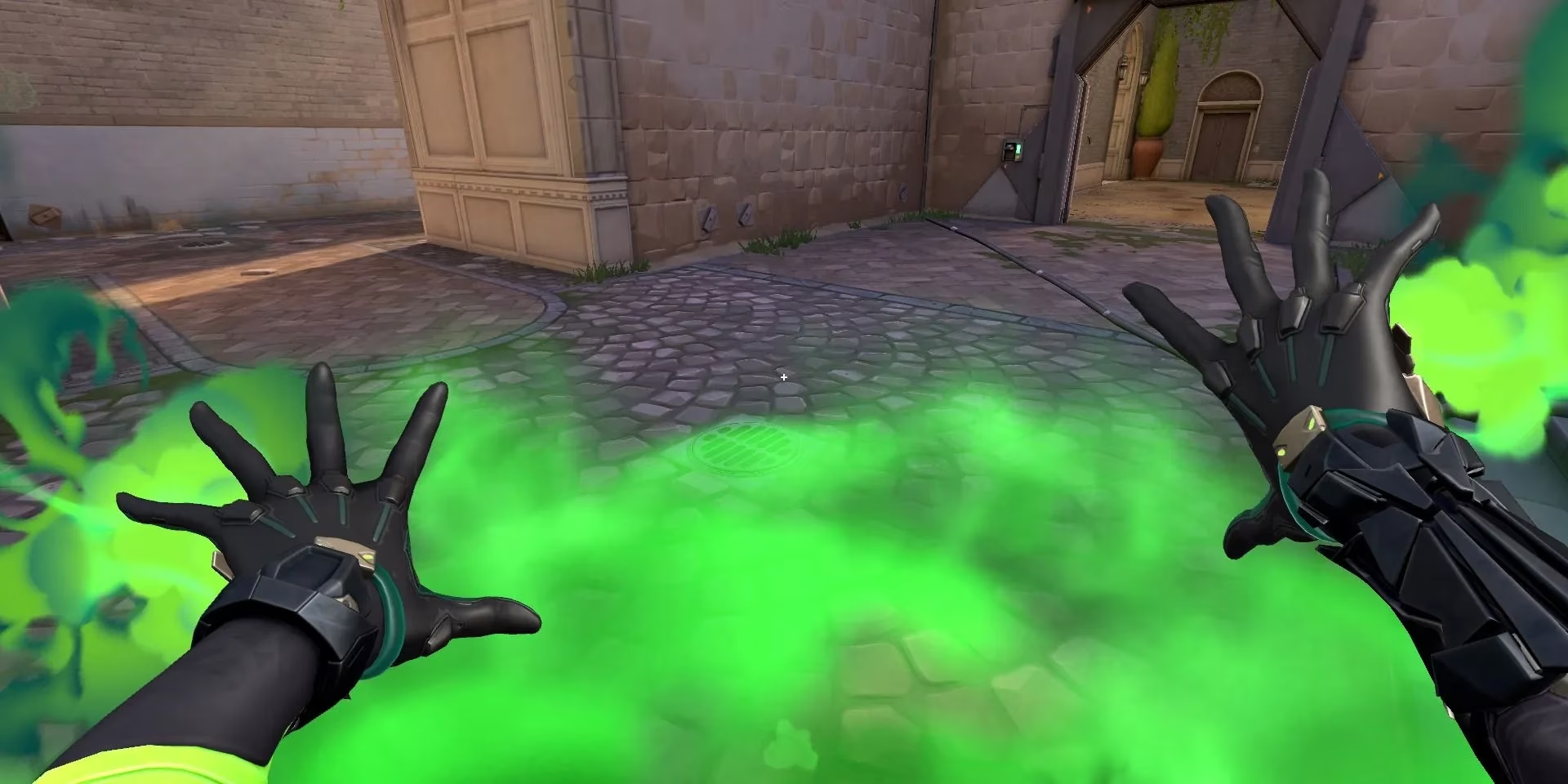
Viper's Pit was less of an ultimate ability and more of a territorial annexation, a zone where she reigned as an absolute monarch. The patch 5.12 nerf, which drastically reduced the time she could spend outside her domain before it collapsed, transformed her sovereignty. No longer could she freely venture out to hunt; she became a guardian tied to her throne room, her power immense but territorially bound. It was like turning a roaming dragon into a fortress—still terrifying, but now predictable and assailable.
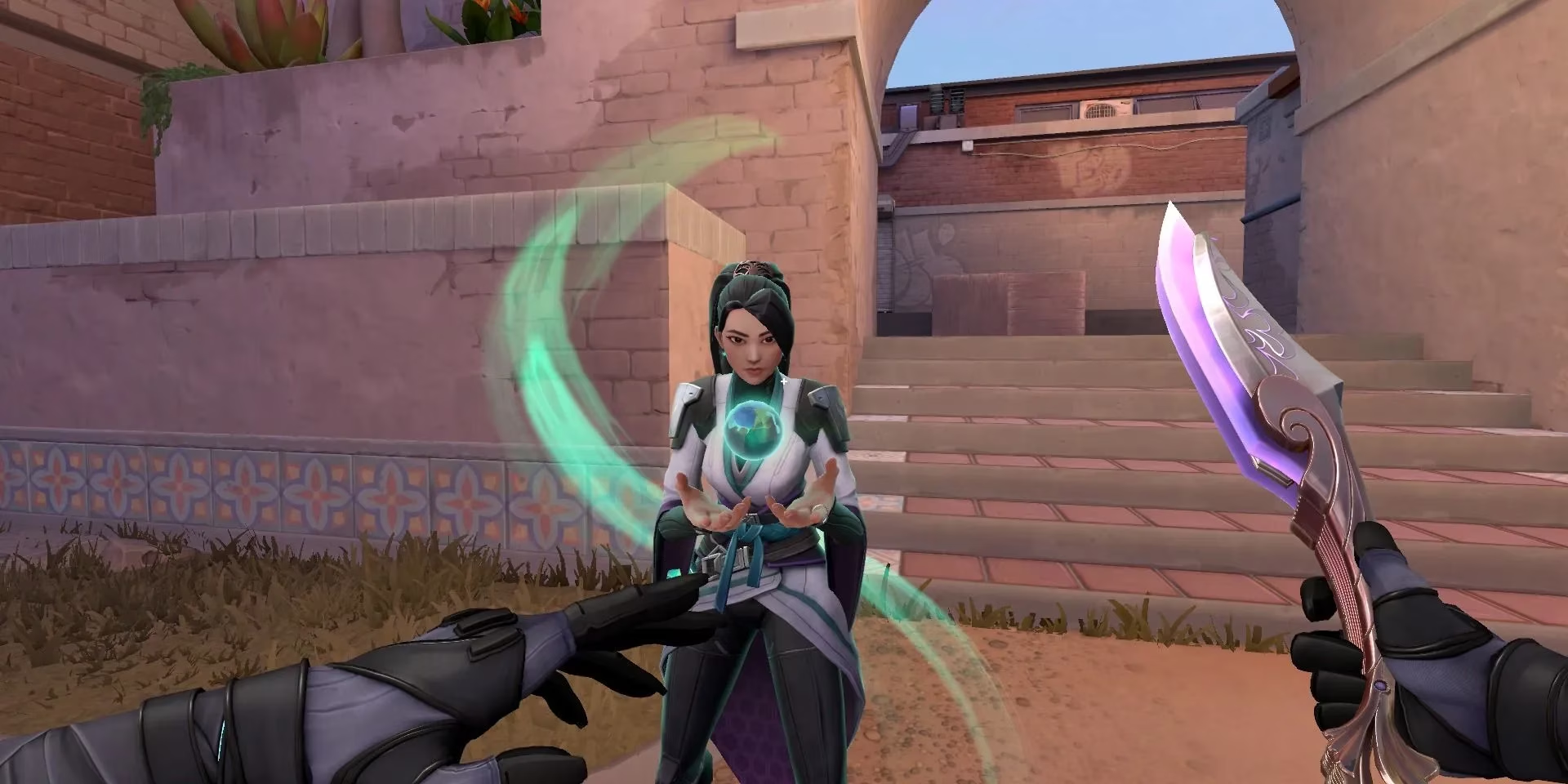
Sage's transformation was one of identity. The 5.12 patch overhaul of her Healing Orb—changing it from a flat 60 HP for all to 30 HP for self-heal and 100 HP for allies—was a philosophical statement from Riot. It forcefully pivoted her from a self-sufficient duelist-support hybrid into a dedicated guardian angel. The aggressive "Battle Sage" playstyle, once a valid and feared tactic, was systematically dismantled. This nerf was controversial because it didn't just adjust numbers; it attempted to surgically alter a player's fantasy, asking those who wielded life itself to do so primarily for others.
Sentinel Overhauls: From Dominance to Obscurity
The tale of Chamber is the most dramatic parable of over-correction in Valorant's history. He didn't just dominate the meta; he defined it, a one-man army whose toolkit rendered traditional positioning obsolete. His nerf in patch 5.12 was a comprehensive dismantling:
-
🔫 Rendezvous: Reduced from two global anchors to one limited-range teleport.
-
⚡ Tour De Force (Ultimate): Increased cost, reduced fire rate, shorter slow duration.
-
📍 Trademark: Given a small proximity radius instead of global map coverage.
The result was not balance, but exile. Chamber vanished from professional play almost overnight, his kit reduced from a Swiss Army knife of dominance to a collection of niche tools. It was a lesson in how a series of targeted nerfs, when applied simultaneously to every facet of a character, can have a catastrophic, meta-shattering effect.
The Duelist's Wings Clipped: Jett's Long Descent
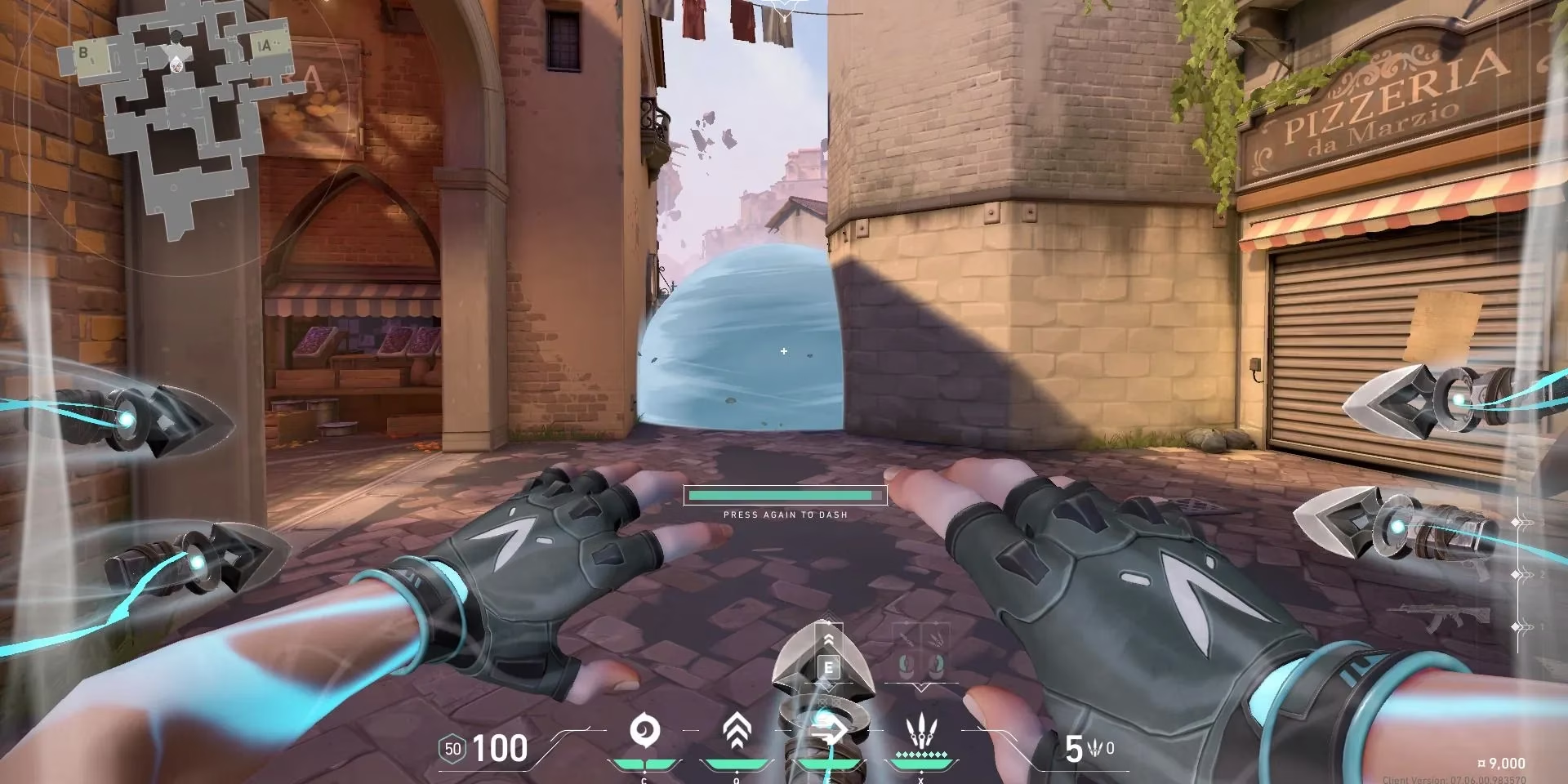
Jett's journey has been a long, slow descent from the heavens. Once the embodiment of hyper-mobility, her signature dash became the focal point of a relentless balancing campaign. The introduction of a delay before the dash in Patch 4.08 was the first major tether. Subsequent nerfs reduced the dash window and increased its wind-up, turning her instant escape into a predictable commitment. With her Updraft charges halved and smoke duration shortened, the agent who once danced on the wind found herself increasingly grounded. These changes sparked eternal debate: had Riot preserved the soul of the agile duelist, or had they simply clipped her wings, leaving a ghost of her former self to wander the maps?
The Bug That Broke The Game: Gekko's Wingman
Sometimes, the most impactful nerfs address not raw power, but logical absurdities. Gekko's Wingman, capable of planting the Spike, introduced a bizarre scenario: what if the cute creature was the last "player" alive? Initially, it could win the round solo, leading to clips where a tiny, defusing monster became the most clutch entity on the server. Riot's swift fix—ensuring Wingman always dies if it's the last one standing—was a necessary injection of common sense. It was a nerf to narrative inconsistency rather than statistical power, preserving the core fantasy of the ability while removing a game-breaking loophole.
Conclusion: The Never-Ending Tapestry
As of 2026, the history of Valorant is inextricably woven with the threads of these nerfs. Each major change is a ripple that disturbs the entire pond, forcing professionals to reinvent strategies and casual players to relearn muscle memory. They are proof that a live-service game is a living ecosystem, requiring constant pruning and care. The most successful nerfs, like those to Raze's Paint Shells or the rifle ammo reserves, are not remembered as acts of destruction, but as acts of definition. They carve out space for new strategies to breathe and ensure that no single tool, agent, or tactic becomes the immutable language of victory. In the endless pursuit of perfect balance, these nerfs are the painful, necessary, and ultimately defining stitches in the game's ever-expanding tapestry.
Comments