The Ongoing Challenge of Agent Skins in Valorant: Balancing Cosmetics and Competitive Integrity
Valorant Agent skins and competitive integrity remain pivotal topics as Riot Games balances player customization with gameplay fairness. The challenge lies in creating visually distinct cosmetics without altering hitboxes or silhouettes, ensuring the tactical shooter's purity.
Since its explosive launch in 2020, Valorant has cemented its position as a premier tactical first-person shooter. The game's core appeal lies in its diverse roster of Agents, each equipped with unique abilities that define strategic play. While players have enthusiastically embraced the extensive weapon skin system, a persistent request from the fanbase has been the introduction of cosmetic skins for the Agents themselves. As of 2026, this remains a complex topic of discussion, with Riot Games navigating the delicate balance between player customization and the sacred principle of competitive integrity.
The desire for Agent cosmetics is a natural evolution for a live-service game with such a passionate community. Players have grown attached to characters like Jett, Phoenix, and Killjoy, and the ability to personalize their appearance seems like the next logical step. Riot Games has a proven track record in this arena, having created a vast and successful ecosystem of champion skins in League of Legends. Senior Producer Dexter Yu has acknowledged this player desire on multiple occasions, confirming that the development team has actively explored the possibility. The intent to deliver more cosmetic options is clearly present.
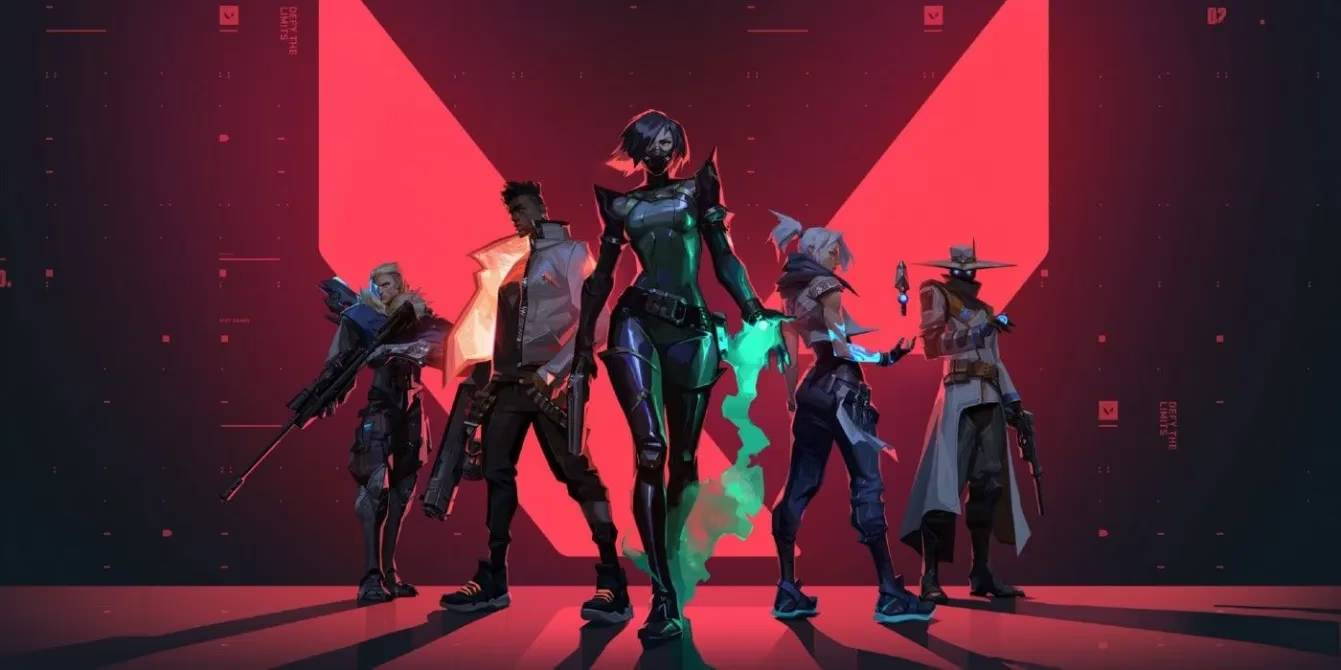
However, the path to implementing Agent skins is fraught with a significant, non-negotiable hurdle: gameplay fairness. The primary concern for Riot's development team is the potential impact these cosmetics could have on hitboxes and character silhouettes. In a precision-based shooter where a single pixel can decide a round, any cosmetic that alters a character's perceived size or outline could confer an unfair advantage or disadvantage. This fear is not theoretical; other titles in the genre have faced criticism when certain character skins made players marginally harder or easier to hit. Riot Games is steadfast in its commitment to preventing such a scenario in Valorant, prioritizing the game's competitive purity above all else.
The core challenge is technical and philosophical. How do you create visually distinct and appealing Agent skins without changing the underlying character model that determines gameplay interactions? A skin that changes an Agent's outfit color or adds minor flair is one thing, but more dramatic transformations—like turning Omen into a spectral knight or giving Raze a completely different mechanical suit—could obscure the immediate visual recognition that is crucial in fast-paced gunfights. The development team is tasked with finding a compromise, a way to "reskin" Agents that feels substantial to players seeking customization but remains completely neutral in terms of competitive impact. This involves rigorous testing and likely creative constraints on what an Agent skin can and cannot alter.
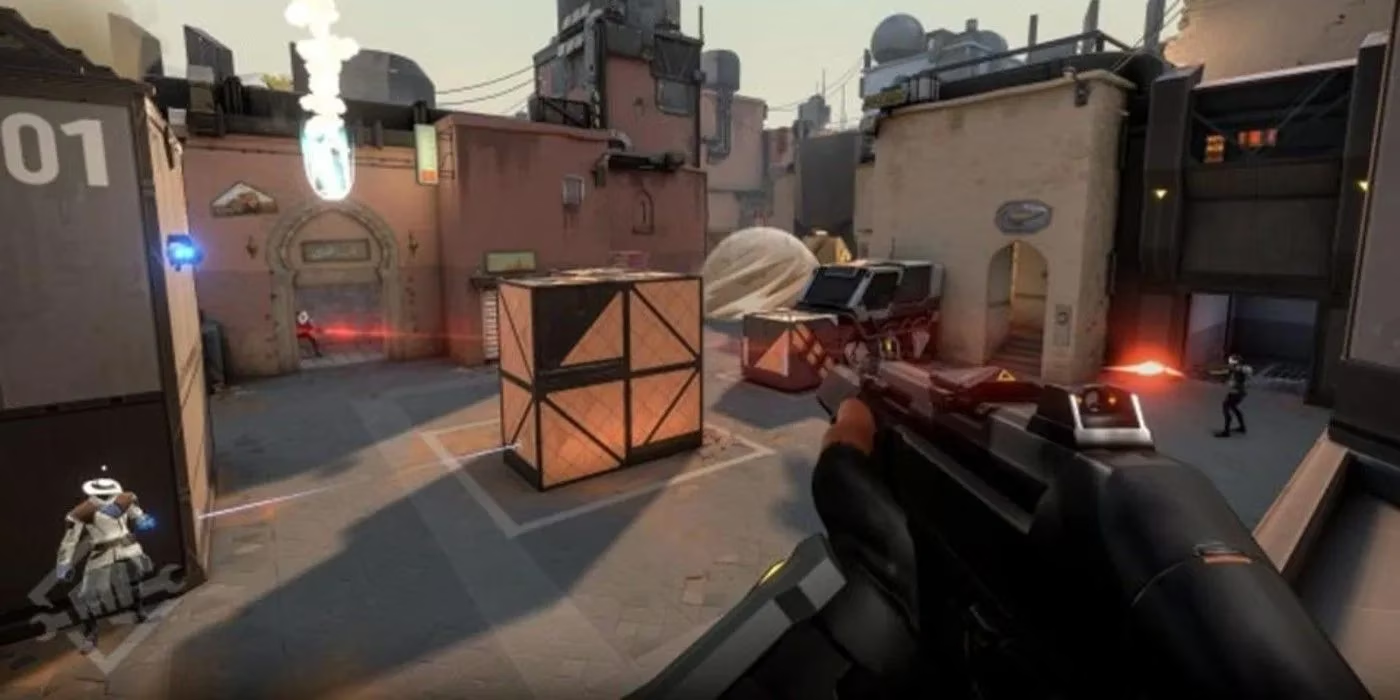
While the community waits, Riot Games has continued to expand Valorant's cosmetic offerings in other areas. The weapon skin system has grown increasingly sophisticated, featuring:
-
Multi-tiered Evolution: Skins that visually change with player progression or achievements.
-
Finishers and Audio: Unique animations and sound effects that accompany final kills.
-
Themed Collections: Bundles that tell a cohesive visual story across multiple weapons.
This focus ensures a robust monetization and customization system exists, even as the Agent skin dilemma is solved. Furthermore, the studio's resources are consistently allocated to maintaining the game's health, including:
🔧 Bug fixes and glitch patches (like the historical Sage-Killjoy interaction).
⚖️ Agent and map balance updates to keep the meta fresh and fair.
🌍 Server stability and anti-cheat measures to protect the competitive environment.
Looking ahead to the future of Valorant cosmetics, several potential solutions for Agent skins have been speculated upon by the community and analysts:
| Potential Approach | Description | Pros | Cons |
|---|---|---|---|
| Recolor-Only Skins | Simple palette swaps (e.g., a blue-tinted Jett). | Zero hitbox impact, easy to implement. | May not feel "premium" or satisfying enough for players. |
| Outfit-Confined Models | New outfits that strictly conform to the original model's silhouette. | Allows for more creativity while preserving shape. | Extremely difficult to design meaningfully different looks within strict confines. |
| Tournament/Event-Only Skins | Special skins available only in custom or non-competitive modes. | Allows for wild creativity without affecting ranked play. | Would not fulfill the desire for personalization in primary competitive modes. |
| "MVP" or "Final Kill" Showcase | A brief, non-interactive cosmetic change that appears after a round ends. | Adds flair without affecting gameplay moment-to-moment. | Is a tangential solution, not a true in-game skin. |
Ultimately, the introduction of Agent skins represents a major milestone that Riot Games will not rush. The developer's reputation is built on a foundation of competitive integrity, and any misstep in this area could damage player trust significantly. The process involves not just artistic design, but deep engine-level work to ensure cosmetics are purely client-side visual effects with no bearing on server-side calculations for hit detection. As Valorant continues to evolve with new Agents, maps, and game modes, the technical framework for a fair Agent skin system may yet be developed. Until then, the community's wish remains a topic of active, careful consideration by a developer determined to get it right, whenever "right" becomes technically and philosophically possible.
Comments