The Great Betrayal: How Kernel-Level Anti-Cheat Became Gaming's Most Intrusive Villain in 2026
Kernel-level anti-cheat software like Denuvo and Vanguard promises a cheat-free utopia but demands the terrifying surrender of your PC's sovereignty and privacy.
Picture this: you boot up your PC in 2026, eager to dive into your favorite digital worlds, but unbeknownst to you, a silent, all-seeing guardian—or perhaps a tyrant—has already taken up residence in the very heart of your machine. This isn't a dystopian sci-fi plot; it's the reality for millions of gamers who just wanted to play a fair game. The war against cheaters has escalated into a full-blown invasion of personal digital space, with developers like the folks behind VALORANT and DOOM Eternal deploying anti-cheat software so deep in your system's core, it makes your operating system blush. The promise of a cheat-free utopia has come at a terrifying cost: the surrender of your PC's sovereignty.
Denuvo's Deep Dive: A Kernel of Controversy
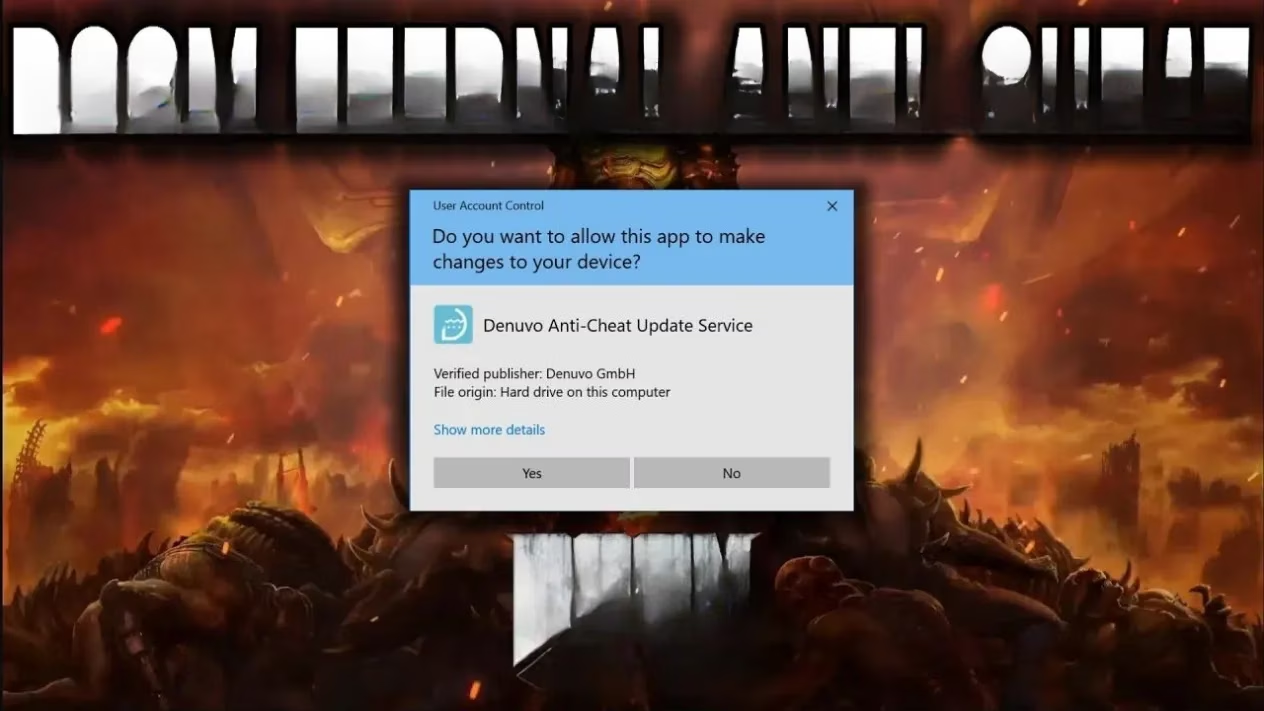
Remember when DOOM Eternal first launched? It was a glorious, demon-slaying renaissance. Fast forward to its first major update, and players got a nasty surprise bundled with the new content: the Denuvo Anti-Cheat kernel-mode driver. Now, this thing isn't just a program; it's a piece of software that operates at the kernel level—the most privileged, foundational layer of your operating system. Think of it as a bouncer who doesn't just check your ID at the door but moves into your house and sleeps on your couch, only leaving when you specifically tell the game to close. The product owner, Michail Greshishchev, tried to calm nerves by stating, "No monitoring or data collection happens outside of multiplayer matches." But for the gaming community, that was like a fox promising it only eats chickens on Tuesdays. The response was immediate and furious: Steam reviews were bombed, and forums lit up with well-deserved outrage. The real issue wasn't just the software's reach, but the stunning lack of communication. Bethesda changed the deal after the sale, and players felt rightly betrayed, demanding refunds en masse. Talk about a hell of an update!
Vanguard: The 24/7 Digital Overlord
If Denuvo's driver is an intrusive house guest, then VALORANT's Vanguard is a landlord who installed security cameras in every room—and they're on from the moment you flip the power switch. This kernel-level rootkit is always active, providing Riot Games with a breathtaking level of access to your PC. It can, in theory, take a full inventory of your installed software and send files back to the mothership for analysis. Riot's response? A flood of PR-speak and promises. They swore up and down that they'd never, ever sell your data to third parties. "Just trust us," they said, with smiles as polished as their game's graphics. But let's be real, in an industry with a spotty record on ethics—and given Riot's own documented history of a toxic workplace culture—blind trust is a mighty big ask. Players were essentially told to trade a chunk of their digital independence for the privilege of playing a tac-shooter. That's a tough pill to swallow.
The Glaring Weaknesses: When Security Becomes the Threat
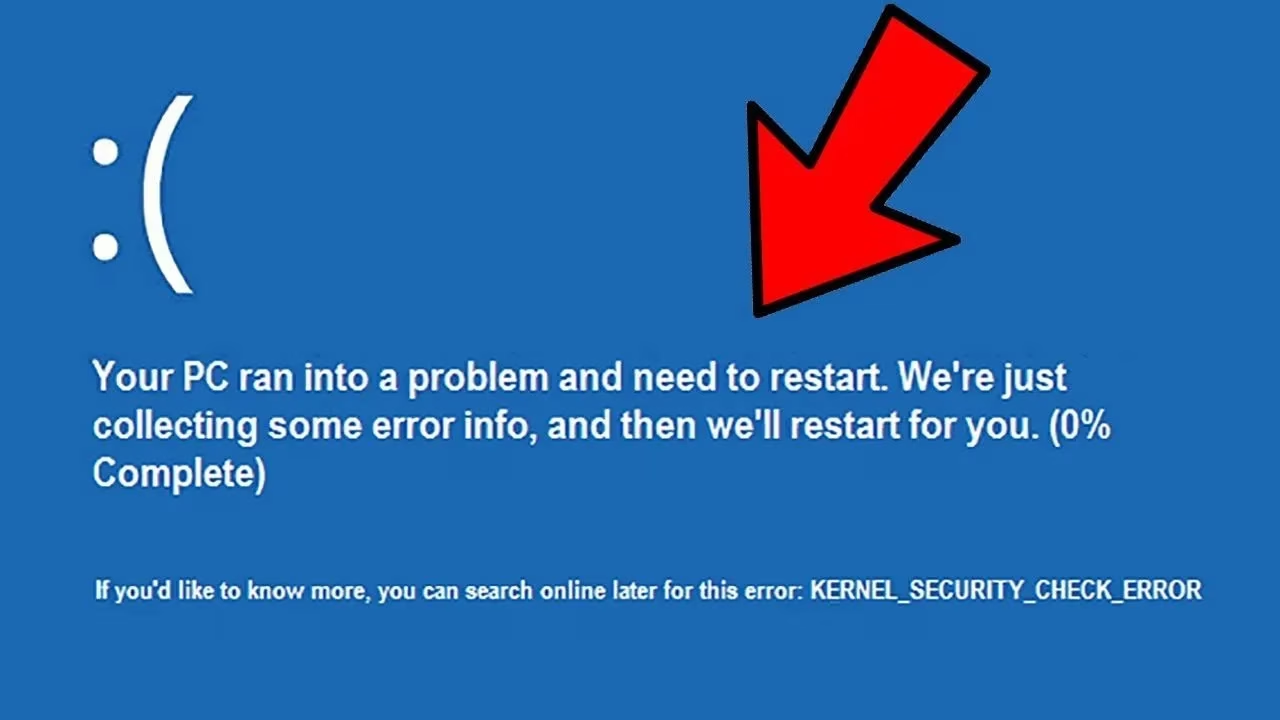
Okay, so maybe you're the trusting type. You believe the promises. The problem is, the technology itself is a ticking time bomb. Kernel-level access is no joke. Any bug or vulnerability in the driver code isn't just a game crash; it's a potential system-wide catastrophe. We're talking the dreaded Blue Screen of Death, folks. Your entire PC, brought to its knees by anti-cheat software. Even scarier? If a malicious actor finds a way to exploit this high-level access, the damage could be catastrophic. Installing malware at the kernel level is like giving a burglar the master key to your city. Compared to that, traditional cheats are like kids drawing on the walls. The very software sold as protection could become the ultimate backdoor. Yikes.
The Hollow Promise: A History of Empty Words
So, who holds these companies accountable? The short, brutal answer: basically nobody. CEOs make grand promises, but whether they keep them is entirely up to them. History is littered with examples of corporations failing spectacularly to protect user data. Take the 2017 Equifax breach, which exposed the sensitive information of millions. Years later, what changed? Not much beyond some PR teams doing the apology tour. If a similar breach happened through an anti-cheat exploit, what would happen? The company would issue a press release full of "deep regrets" and "commitments to do better," while users are left picking up the pieces. The onus, as always, falls on us, the individuals. No shiny trailer or competitive ladder is worth handing over the keys to your digital kingdom.
The Bottom Line for 2026
Here’s the deal, plain and simple:
-
The Trade-Off: Cheat-free matches vs. unprecedented system access.
-
The Risk: System instability, major security vulnerabilities, and zero meaningful accountability.
-
The Power: It rests solely with you, the player, to decide what you install.
In 2026, the message is clearer than ever: protecting your personal data and your machine's integrity is your job. If the cost of entry for the latest hit game is a kernel-level rootkit, maybe that game isn't worth playing. Skipping VALORANT or a post-update DOOM Eternal isn't missing out—it's a perfectly reasonable stand for your digital rights. After all, in the battle between fun and freedom, some lines just shouldn't be crossed. The choice, as they say, is yours.
Comments