The Black Market for Game Beta Access: A Cautionary Tale from VALORANT
VALORANT beta key black market risks highlight dangers of third-party access and random drop systems in gaming, urging patience for players.
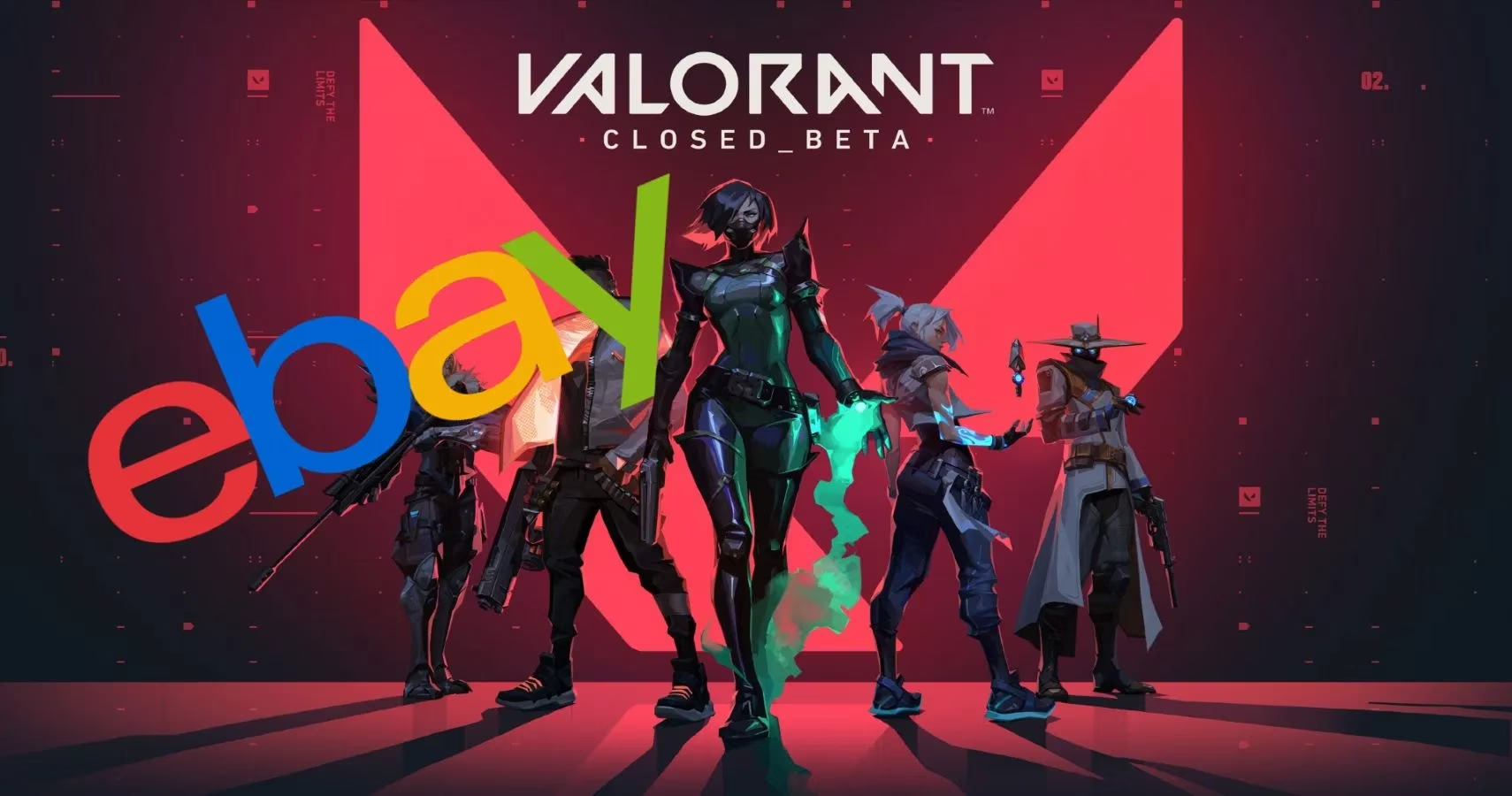
The early access frenzy that accompanied the launch of VALORANT’s closed beta in April 2020 exposed a persistent and unsavory side of the gaming world: the black market for beta keys. Within hours of the first Twitch-enabled drops going live, listings on eBay and similar platforms began offering guaranteed access for anywhere between fifty dollars and several hundred. The allure was immediate—players weary of watching streams for days without a whisper of a key saw a shortcut. However, even in 2026, as countless titles continue to rely on random drop systems for their test phases, the same dangers remain. Looking back at the VALORANT example provides a textbook study in why purchasing such access is never worth the risk.
The randomness that defined the original VALORANT beta was by design and remains a staple of modern game testing. Viewers would link their Riot Games account to Twitch and watch designated streamers, hoping that the automated system would flag them for a drop. For some, keys appeared in under an hour; for others, a full week of constant viewing yielded nothing. This uneven distribution created a fertile ground for account sellers. A single individual could create multiple Twitch and Riot accounts, farm for keys, and then sell the entire account package to desperate buyers. The sellers’ market thrived on impatience, often luring customers with promises of immediate login credentials and the thrill of bypassing the queue.
Despite the seemingly convenient offer, buying beta access from a third party was—and still is—a terrible idea for several reasons. First, the seller retains the ability to reclaim the account at any time. Since the original registration information belongs to them, a simple password reset or recovery request can lock the buyer out permanently, leaving them with nothing but an empty wallet. Second, the practice explicitly violates the Terms of Service of every major publisher, Riot Games included. Accounts flagged for unauthorized transfer risk a full, irreversible ban, which often materializes months later when the buyer has already invested significant time and even money into skins or battle passes. Finally, the very premise collapses under scrutiny: the keys were always meant to be free. Drop events are designed to run continuously for the foreseeable future of a test phase, meaning that patience alone would eventually grant access to the vast majority of hopeful players.
Riot Games’ decision not to impose an account age restriction during the VALORANT beta drew criticism but also highlighted a deliberate trade-off. Limiting drops to accounts older than, say, three months would have prevented the most blatant farming activities, yet it would have also excluded countless newcomers who were only then discovering Twitch specifically because of the event. From a business perspective, the massive surge in viewership numbers—some of it undoubtedly driven by duplicate accounts—gave the game and the platform a marketing victory that few could ignore. By 2026, however, the industry has evolved its defenses. Many developers now employ phone number verification, hardware ID checks, and machine learning models to detect suspicious patterns in drop farming. Still, the cat-and-mouse game continues, with sellers adapting to each new hurdle.
The long-term repercussions of the VALORANT beta black market rippled outward, influencing how publishers structure their early access campaigns. Today, it is common to see a gradual multi-phase rollout where initial waves are heavily restricted but subsequent waves become broader. Riot itself later refined its drop system for events like the Arcane premiere and subsequent agent launches, tying rewards more tightly to verified, older accounts and limiting the number of keys generated per region. Yet, the fundamental advice remains unchanged: avoid account sellers at all costs.
For players navigating the landscape of 2026, obtaining legitimate access to a highly anticipated beta is simpler than ever, provided one follows a few sensible steps.
| 🛡️ Method | ⏳ Effort Level | ❌ Risk of Ban |
|---|---|---|
| Watching official Twitch/YouTube drops | Low | None |
| Registering via the game’s official website | Very Low | None |
| Participating in community giveaway events (verified) | Medium | Very Low |
| Buying an account from a third-party seller | High (financial) | Guaranteed |
As the table suggests, the investment required to earn a drop organically is mostly time, and even that is rarely wasted—many viewers discover new streamers or simply enjoy the background content while working. Simultaneously, platforms have become more transparent about drop eligibility; a small progress bar often shows the remaining time needed, removing the guesswork that once frustrated fans.
Another key shift in 2026 is the normalization of non-transferable access codes tied directly to hardware or a specific account. This means that even if a seller were to obtain a genuine code, the buyer would be unable to activate it without matching the original registered device. Such measures, while occasionally cumbersome, have significantly dried up the liquidity of the black market. The days of freely buying a $50 VALORANT beta account are largely over, replaced by far more sophisticated and equally risky peer-to-peer deals that savvy gamers should still flatly refuse.
Saving money might be the most immediate motivation to avoid these sellers, but protecting one’s digital identity is the deeper concern. An account that holds a collection of paid cosmetics, ranked progress, and linked social profiles becomes a valuable asset over time, and no beta glimpse is worth jeopardizing that. The VALORANT case stands as a vivid reminder that shortcuts in the gaming world often lead to dead ends. Twitch streams and official sign-up pages remain the safe, cost-free, and only truly guaranteed route into the next big closed beta.
Comments