The Art of Agent Creation: A Designer's Perspective on VALORANT's Character Development
VALORANT's agent design philosophy masterfully balances player psychology with game ecosystem health. Each new character, like Killjoy, introduces strategic depth through meticulous prototyping and roster synergy.
As I sit here reflecting on my journey as a player since 2020, I can't help but marvel at how VALORANT has evolved. The roster has expanded dramatically, and each new agent feels like a carefully crafted piece of a complex puzzle. Recently, I've been diving deep into the design philosophy behind these characters, and what I discovered was more fascinating than I expected. Creating an agent isn't just about cool abilities—it's a meticulous process that balances player psychology, game ecosystem health, and long-term strategic depth.
🔍 Identifying Player Archetypes: The Foundation
The journey begins with understanding who will play this character and why. Each agent must serve a specific player fantasy. Think about it—Sage appeals to the supportive teammate who thrives on clutch heals and strategic delays, while Reyna caters to the aggressive duelist hungry for solo frags. This initial phase is like a chef identifying the exact flavor profile they want to create before even stepping into the kitchen. The designers don't just ask "What abilities are cool?" but rather "What emotional experience does this player want?"
-
Sage: The guardian angel – healing, resurrecting, controlling space
-
Reyna: The predator – feast or famine, kill-based empowerment
-
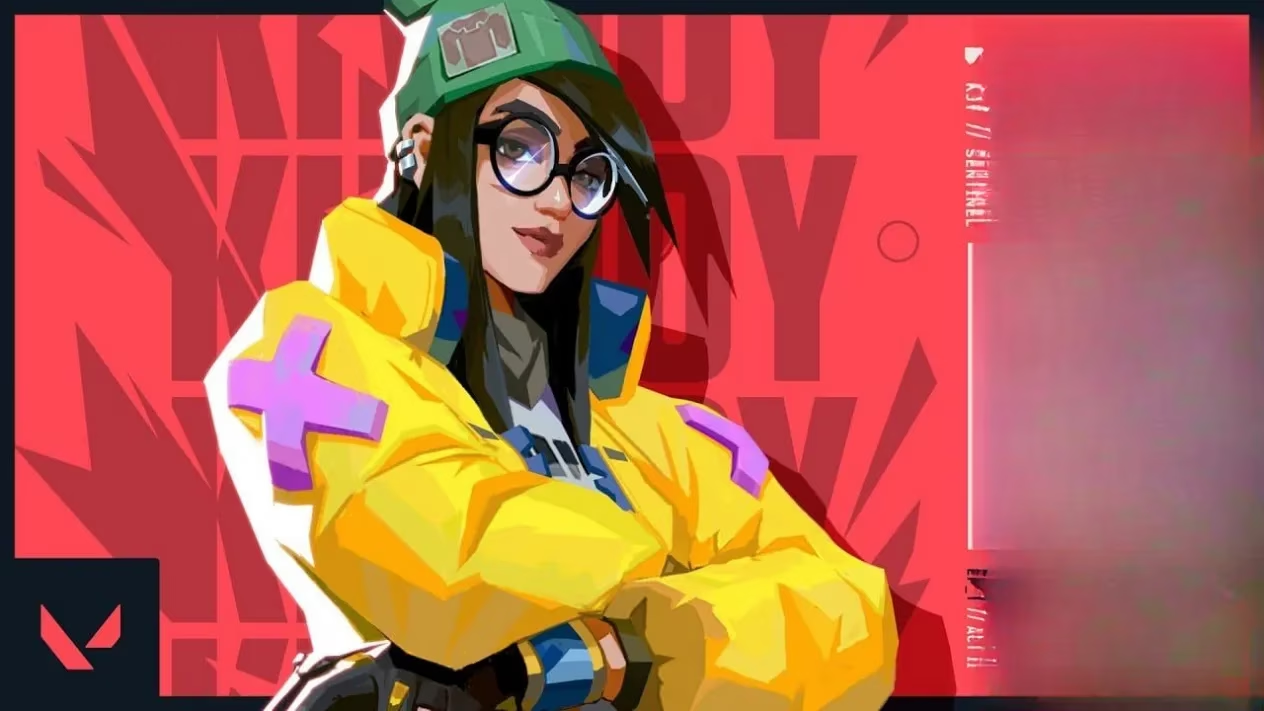
Killjoy: The fortress engineer – area denial through automated threats
🧩 Roster Impact: Beyond Individual Fun
Once the target player is identified, the real challenge begins: how does this character affect the entire game ecosystem? An agent can't just be fun in isolation; they must create new strategic dimensions. This is where the designers think like architects planning a city—each new building must enhance the urban landscape, not just exist as a standalone structure. Killjoy's introduction in 2020 forced teams to reconsider how they approached site takes, adding a layer of automated defense that required new counter-strategies.
Consider the sentinel class evolution:
| Agent | Primary Role | Strategic Contribution |
|---|---|---|
| Sage | Healing/Stalling | Time manipulation through slows and barriers |
| Cypher | Information Gathering | Map-wide intelligence network |
| Killjoy | Area Denial | Automated zone control and threat multiplication |
Each sentinel creates different "problems" for attackers to solve, much like different types of locks requiring different picking techniques.
⚙️ Prototyping: Where Ideas Become Reality
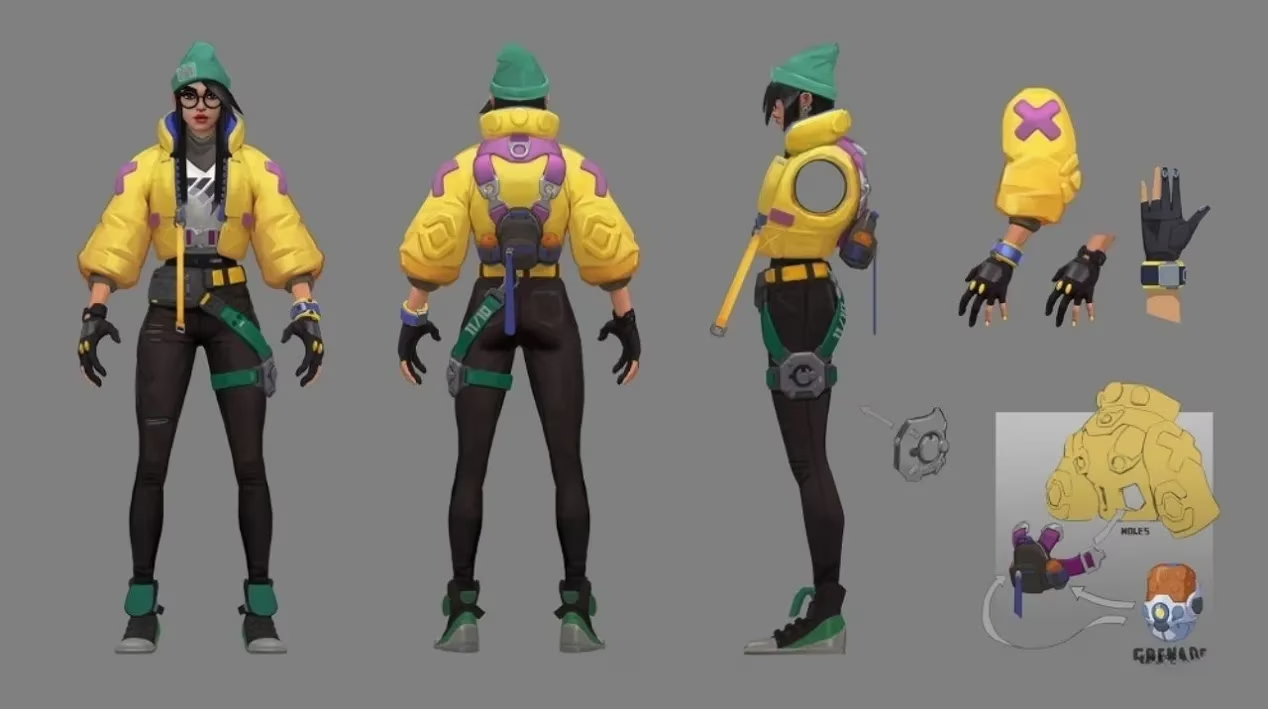
This is where the rubber meets the road. The design team creates multiple ability kits and tests them with the target player demographic. What's fascinating is how much these kits can change during prototyping. An ability that sounds great on paper might feel terrible in practice, while a seemingly simple mechanic might unlock unexpected strategic depth. Killjoy's development was particularly interesting—she evolved from a purely defensive character to one who actively punishes aggression. Her design philosophy became "she doesn't want to stall attackers, she wants to kill them," transforming her from a passive obstacle into an active threat.
⚖️ The Balancing Act: Fine-Tuning Perfection
Balance is where many game characters fail, but VALORANT's approach is surgical. Each ability has "tuning levers"—adjustable parameters that can be tweaked without redesigning the entire kit. Reyna's Leer ability serves as a perfect example: while most of her kit requires kills to activate, Leer provides value regardless of performance, creating a safety net for weaker players. This balancing process isn't just about numbers; it's about ensuring each agent has moments of brilliance but clear counterplay opportunities.
Current balancing considerations include:
-
Individual ability power vs. overall kit synergy
-
Skill floor (accessibility) vs. skill ceiling (mastery potential)
-
Agent-specific strengths vs. universal game mechanics
🚀 Building for Tomorrow: The Long Game
Perhaps the most crucial aspect of agent design is future-proofing. Every new character must add lasting value to VALORANT's tactical ecosystem. They're not just content drops; they're permanent additions to the game's DNA. This forward-thinking approach is like planting a tree whose shade you may never sit under—you're building for players who haven't even discovered the game yet.
Looking at the 2026 roster, we can see how this philosophy has played out. The newer agents introduced since 2023 have continued to expand strategic possibilities without making older agents obsolete. Each addition feels like a new instrument joining an orchestra—it must harmonize with existing elements while adding its own unique voice.
🔮 The Future of Agent Design
With Riot's commitment to adding approximately six agents per year, the design process has only become more refined. The team now considers not just how an agent plays today, but how they'll interact with agents that haven't been conceived yet. This requires designing characters that are complete in themselves yet open to future synergies and counterplays.
As a player who's witnessed this evolution firsthand, I appreciate the careful craftsmanship behind each new addition. The next time you're frustrated by an agent's abilities or delighted by a perfectly executed strategy, remember: you're experiencing the culmination of hundreds of hours of design, testing, and refinement. VALORANT's agents aren't just characters; they're carefully engineered experiences that continue to shape one of esports' most dynamic competitive landscapes.
Comments