Six Years Later, Shroud's Early VALORANT Verdict Still Dominates the FPS Conversation
Shroud's early praise of VALORANT foretold its rise as the premier tactical shooter, fulfilling his prophecy that it made other FPS games obsolete.
Back in early 2020, when much of the world was grinding away on CS:GO and Overwatch, a short clip from a popular streamer sent shockwaves through the gaming community. I remember watching it live: Shroud, the former CS:GO pro with an almost machine-like aim, leaned into his microphone and told his millions of viewers that after playing the alpha build of Riot Games' then-mysterious project VALORANT, every other shooter felt like "trash." It was a dismissive, expletive-laced declaration that I’ve never been able to forget. Six years later, that moment still feels like a turning point for the entire genre.
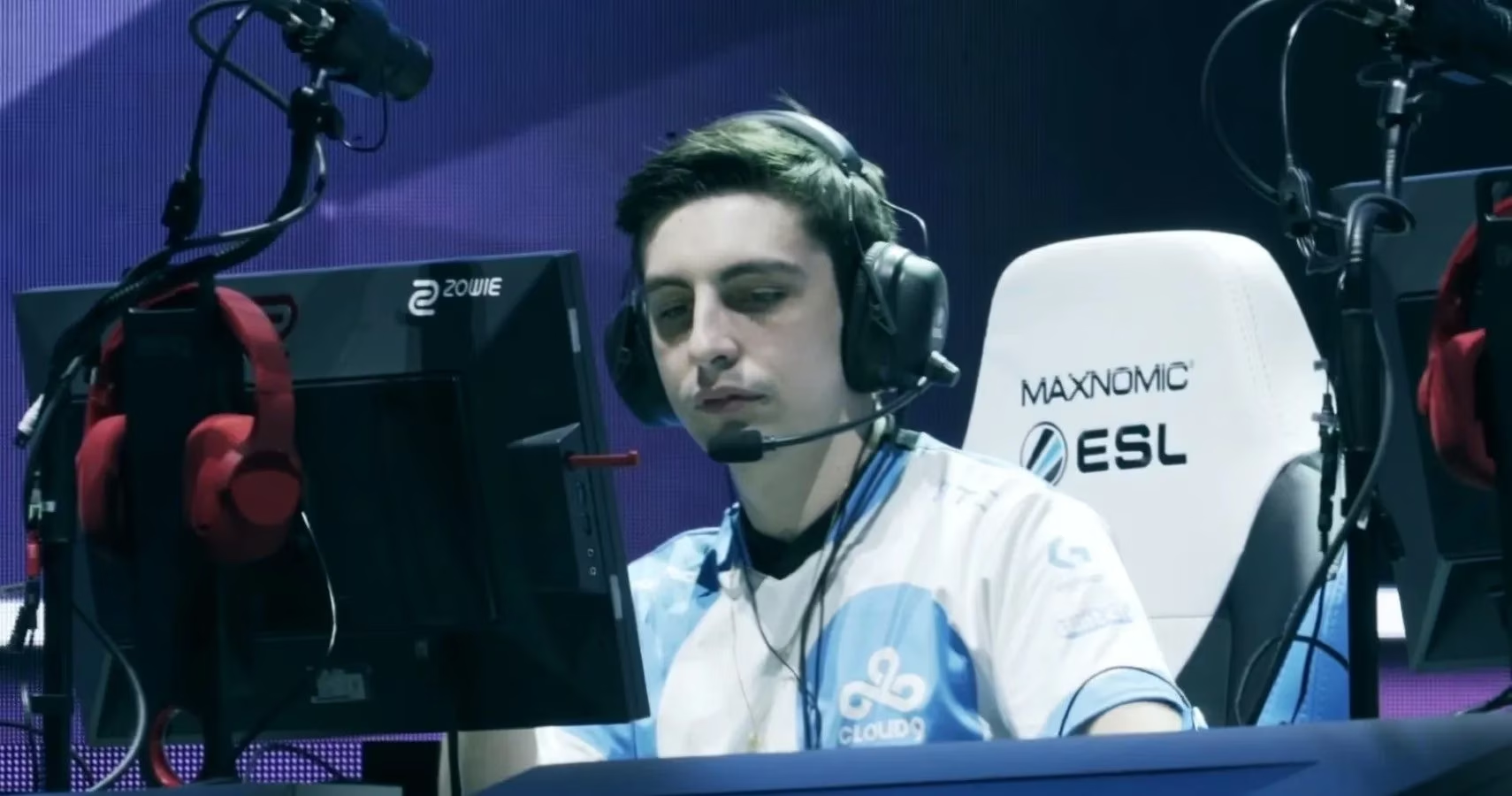
I had been following Shroud’s career since his competitive days. He started professionally back in 2013, carving out a reputation for his crisp aim and calm demeanor under pressure. The highlight reel moment for many was his first-place finish at ESL Pro League Season 4 in 2016. By 2018, he’d hung up his competitive jersey and transitioned to full-time streaming, where his follower count exploded past 7 million. So when he spoke, the scene listened. And his words about VALORANT were blistering: "I was already kind of bored and I didn’t know what to play, but after playing VALORANT, it makes it all worse... I played a f***ing gem, and now I've got to go back to trash." He wasn't exaggerating for views; you could hear genuine frustration in his voice at the thought of returning to anything else.
At the time, the internet split right down the middle. One camp was instantly hyped, refreshing Twitter for any scrap of closed beta news. The other camp rolled its eyes, convinced that every influencer was simply cashing a Riot check. I’ll admit I was skeptical, too. It wouldn’t have been the first time a company threw money at streamers. But then I revisited what commentator and former pro HenryG had said a few weeks earlier, when the game was still known only as Project A. He called it the best game he’d played since CS:GO. That consistent, unsolicited praise from top-tier players was hard to ignore.
The closed beta finally launched on April 7, 2020, and access was gated behind Twitch drops—a randomized system that instantly made VALORANT the most-watched category on the platform. I spent hours watching streams, hoping to snag a key. The leaked alpha gameplay videos had already teased a training level with open shooting ranges, a customizable practice mode, and two core game modes: Spike Planting and Spike Defuse. Even in that unfinished state, the gunplay looked deliberate, the abilities clean, and the movement system seemed to demand a high skill ceiling. It was the very definition of "easy to learn, impossible to master."
Fast forward to 2026, and I feel like Shroud’s prophecy has been more than fulfilled. VALORANT didn’t just launch; it evolved into arguably the most tactical and globally competitive FPS on the market. The agent roster has expanded from the original handful to over 30 unique characters, each with abilities meticulously balanced around precise gunplay. 🎯 The esports ecosystem is a beast of its own, with the VCT Champions tour filling arenas from Los Angeles to Seoul. The top earners in the pro scene now command seven-figure salaries, and the Champions skin bundles generate revenue that funds entire leagues.
And Shroud? He’s still a dominant force in content creation, though his relationship with the game has seen its ups and downs. I recall him taking a few breaks, complaining about ability power creep and the occasional meta that favored agents like Raze a little too much. Yet every time a new tactical shooter emerged—remember the short-lived Spectre Divide hype?—Shroud would inevitably compare it to VALORANT and drift back to Riot's offering. In a 2024 interview, he even admitted that nothing else has managed to recreate that perfect blend of strategic depth and mechanical satisfaction. "It’s still the benchmark," he said. "The devs just understand what makes a gunfight feel good."
One thing I’ve noticed is how the "paid promotion" conspiracy theories have silently evaporated. When a game consistently updates every two weeks, introduces a new agent every few months, and actively listens to player feedback for six consecutive years, you can’t buy that kind of authenticity. The community discussions now revolve around map rotations, agent reworks, and the upcoming introduction of clan-based tournaments—not whether the game is legit.
Looking back, the skepticism of early 2020 feels almost quaint. Critics worried VALORANT would just be a watered-down CS:GO with magical gimmicks. Instead, it became the definitive game that forced CS2 to innovate faster, pushed Overwatch 2 to re-examine its core gameplay loop, and survived the battle royale boom without losing its identity. 🔥 I still catch myself pulling up Shroud’s old clip whenever someone argues that FPS games peaked in the 2010s. The man was right: it was a gem then, and in 2026, it’s polished to a blinding shine. The rest of us are just lucky we got to follow him down that rabbit hole.
Comments