Remembering the Most Ambitious Crossover in Esports History 🎮✨
ESPN's Valorant Invitational united pro players from seven esports titles in beta, spotlighting potential despite anti-cheat controversy.
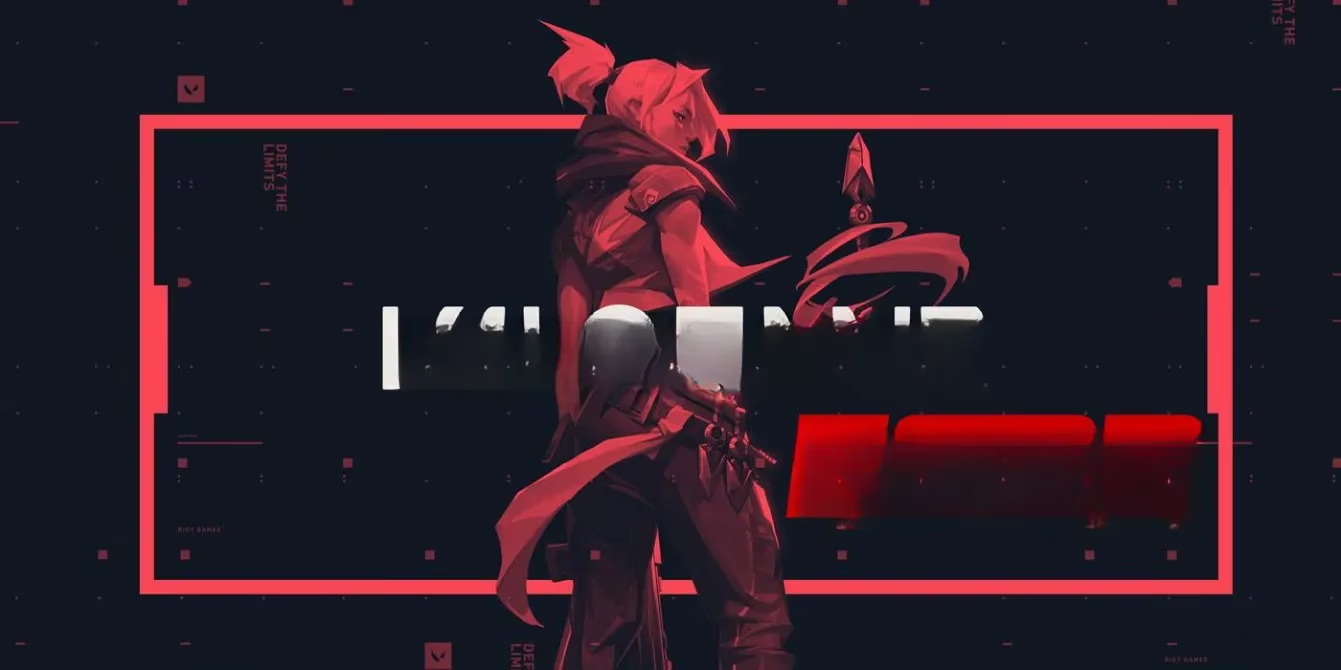
Back in April 2020, the gaming world was buzzing with a bold claim from ESPN Esports – they were hosting the 'most ambitious crossover in esports history'. A lot has changed since then, but I still vividly remember how that Valorant Invitational lit up my lockdown days. Like, it felt like the Avengers of competitive gaming were assembling, and honestly? It kind of was. 🌟
Fast forward to 2026, Valorant is now a titan in the esports scene, with millions watching VCT events. But back then, the game was just a closed beta, and this tiny online tournament was its first real test. I can't help but look back and laugh at how crazy that crossover actually was. Riot Games, fresh off dominating MOBAs with League of Legends, decided to throw a tactical shooter into the mix. And ESPN, of all companies, jumped in to prove it could be huge.
The Crossover Roster 🤝
ESPN's plan was simple but genius: bring together pro players and streamers from seven other massive games, plus actual Valorant developers. Every day, I'd check Twitter to see which legends would be dropped into the fray. The lineup was a dream for any esports fan:
-
🛡️ Counter-Strike: Global Offensive (the OG tactical shooter)
-
🏗️ Fortnite (the battle royale king)
-
🧙 League of Legends (Riot's own giant)
-
🪖 PlayerUnknown's Battlegrounds (the one that started the BR craze)
-
🎯 Rainbow Six Siege (tactical chaos, anyone?)
-
🚀 Apex Legends (fast-paced hero shooter)
-
🤖 Overwatch (team-based ability shooter)
Imagine the banter! You had mouse-gods from CS:GO trying to figure out Sage walls, Fortnite builders suddenly dealing with abilities, and LoL strategists breaking down agent comps like it was a draft phase. I remember watching the stream and feeling like every round was a mini-experiment in gaming culture. The tournament ran from April 20–22, streamed on ESPN Esports' Twitch, and I was glued to my screen.
They even structured teams around each original game, like "Team Battlegrounds" and "Team Counter-Strike." It wasn't just a one-off showmatch – it was a statement that Valorant could bridge the gap between these communities. And honestly, it worked. After watching Shroud dominate as Jett or Summit1g clutching with Phantom, I knew this game had legs.
The Beta Era Blues & Anti-Cheat Drama 🔒
But let's keep it real – the beta days weren't all highlight reels. Valorant's anti-cheat system, Vanguard, was the talk of every Reddit thread. People were getting kicked from games just for plugging in a phone charger, and the word 'invasive' got thrown around a lot. I was one of those players sweating every time I needed to charge my phone mid-match. 😅
Riot didn't budge, though. They were so committed they literally offered bounties for finding exploits. In 2020, that felt extreme, but now in 2026, looking at how clean competitive Valorant has stayed compared to other shooters? It paid off big time. Vanguard has evolved into a much smarter system, but its early strictness set the tone. During the ESPN Invitational, every kill felt legitimate because we knew the anti-cheat was watching. That peace of mind was priceless.
Another fun fact from back then: Riot included a toggle for blood graphics. At the time, people joked it was a family-friendly move, but it showed how serious they were about broadcast accessibility. I remember a dev saying it was designed for esports success, and boy, they weren't kidding.
How It Shaped 2026's Scene 🔮
Looking back, that tiny invitational planted the seeds for what Valorant became. Today, in 2026, we have international leagues, massive arenas, and rookies who grew up watching those first crossover clutches. I often wonder: if that event had flopped, would Valorant have pushed through? The devs learned so much from having outsiders poke at their game – agent balance, map flow, the importance of a smooth spectator mode.
| What ESPN Invitational Tested | 2026 Reality |
|---|---|
| Cross-pro player adaptability | Regular showmatches between games |
| Anti-cheat reliability | Vanguard is standard for competitive shooters |
| Spectator appeal | VCT broadcasts have cinema-level production |
| Developer-player interaction | Pro feedback shapes every patch |
The meme about the 'most ambitious crossover' stuck around, but for a good reason. It proved that mixing communities isn't just fun – it's healthy for the whole scene. I still rewatch the VODs sometimes and see all the familiar names who later became Valorant superstars.
So, to anyone who thinks back on 2020 and only remembers banana bread and bad news, I'd say: remember this tournament. It was a moment where gaming genuinely felt united, even if just for a weekend. And honestly, I wouldn't mind if ESPN did a 2026 reboot. Same chaotic energy, but with all the new agents. Just imagine TenZ trading headshots with a Fortnite pro who's been grinding the range... I'd watch that in a heartbeat. 💥
Valorant has come so far from a closed beta with sketchy anti-cheat to a global phenomenon. And the ESPN Invitational? It was the beautiful, messy, and ambitious crossover that kicked it all off.
Comments