Navigating VALORANT's Ever-Evolving Weapon Skin Shop and Microtransactions in 2026
VALORANT's 2026 store pairs limited-time weapon skin bundles with a personalized Valorant Points economy featuring recommendation algorithms.
Even as the tactical shooter landscape shifts with each passing year, VALORANT maintains its position as a free-to-play giant, much like its older sibling League of Legends. The core philosophy remains unchanged: anyone can download the game and compete at any level without spending a single dollar. Revenue flows instead from a thriving cosmetic economy—most notably, the weapon skins that transform mundane firearms into objects of desire. In 2026, the skin marketplace feels more like a living ecosystem than a static storefront, blending scheduled curation, personalization algorithms, and the subtle psychology of rarity.
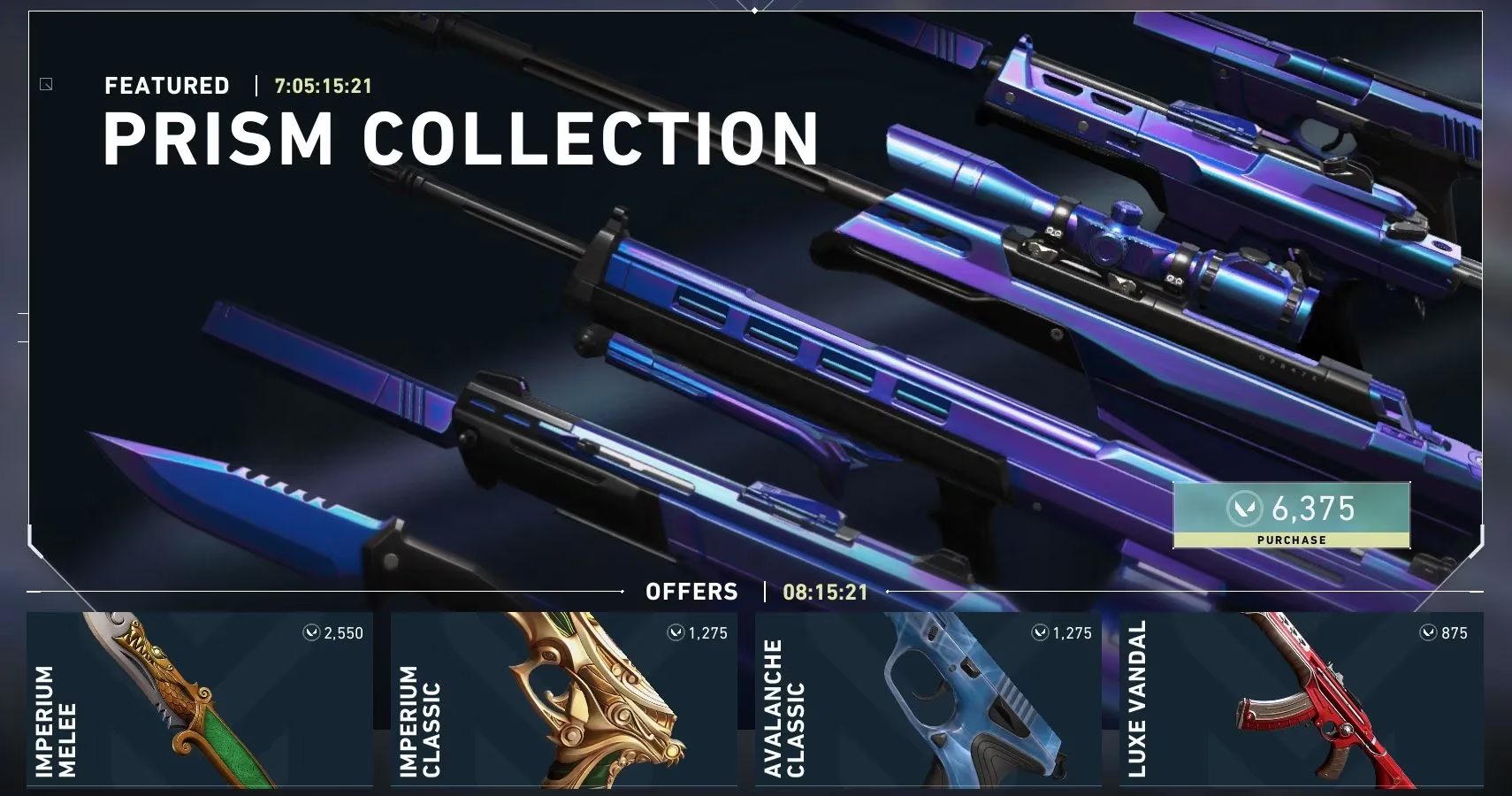
Accessing this ecosystem is as intuitive as ever. After launching the client and arriving at the main hub, a row of tabs runs across the top of the screen—Play, Agents, Career, Collection, and the pivotal Store. A single click transports players into a sleek interface where weapon skins reign supreme. The layout balances immediacy with anticipation; a featured bundle or skin series occupies prime real estate at the top, refreshed on a weekly cadence, while a personalized set of four daily offers sits just beneath, rotating every 24 hours. This dual cycle ensures that no two players will ever see exactly the same shop, even if they were to log in at the exact same moment.
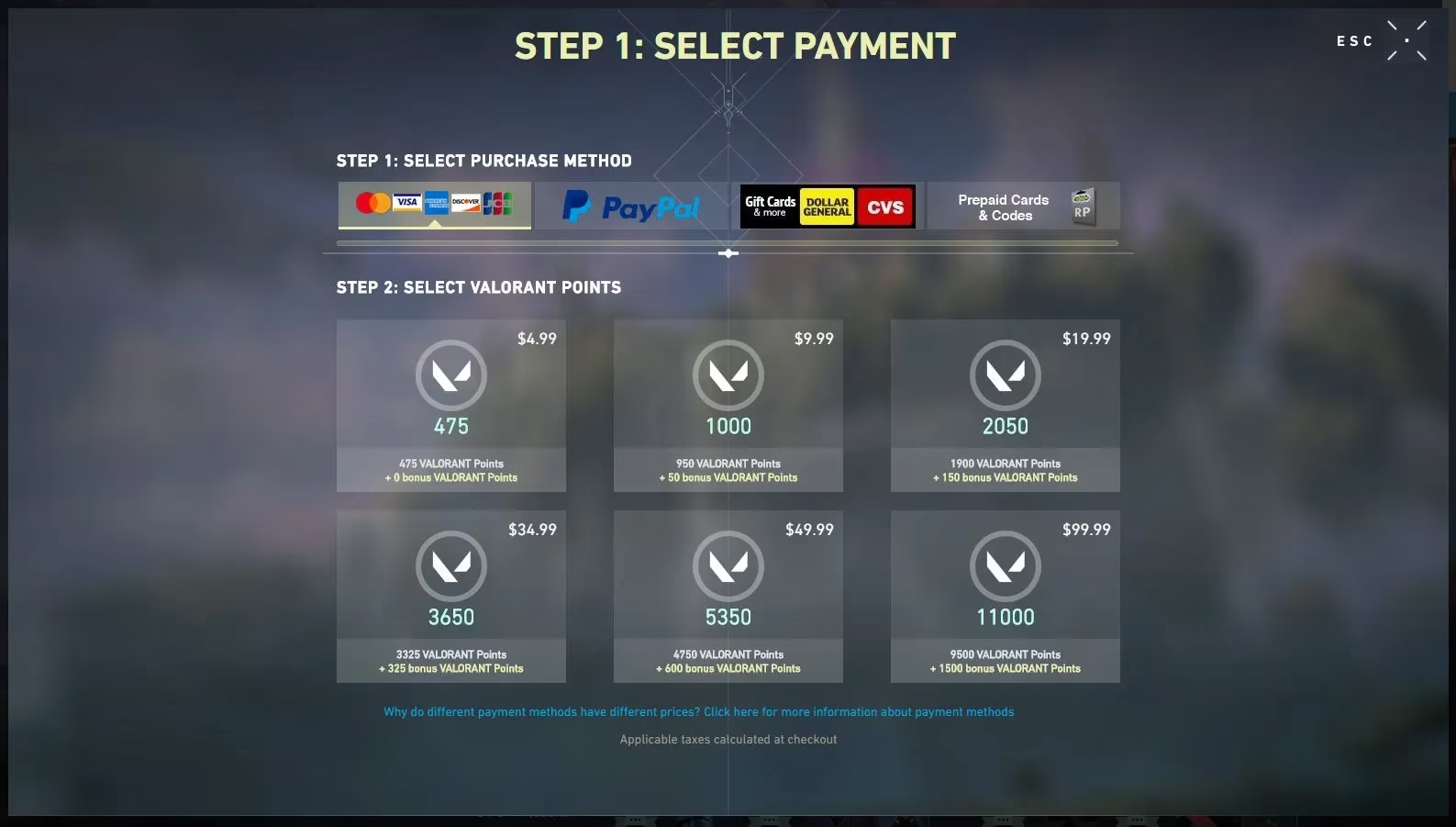
The currency behind every purchase is Valorant Points (VP), denoted by a stylized “V” icon in the upper-right corner of the screen. These points have no in-game source—they must be acquired by exchanging real-world money. Clicking the VP balance brings up the purchase screen, where tiered bundles offer incrementally better value: the more points bought at once, the larger the bonus. Alongside VP sits the Radianite Points (RP) balance, marked by an “R” icon. While Radianite can be earned slowly through gameplay and Battle Pass progression, its primary role is to upgrade skins—unlocking visual effects, animations, and color variants that elevate a base skin into something truly spectacular. This dual-currency system creates a gentle but persistent friction: you might own a beloved skin, but fully realizing its potential often demands either patience or a further investment.
What makes the 2026 shop feel particularly alive is the recommendation algorithm that hums beneath the surface. Every skin bought, every long stare at a particular bundle, feeds into a learning model that tailors future offerings. A player who consistently gravitates toward the sleek minimalism of the Prime or Reaver lines will soon see more clean, sci-fi or dark fantasy offerings. Someone addicted to the whimsical BlastX or Wonderstallion themes will instead wake up to colorful, toy-inspired rotations. Over time, the shop evolves into a bespoke catalogue that seemingly knows your taste better than you do—and it is all too happy to tempt you with a return of that one skin you hesitated on months ago.
The selection itself ranges from individual skins to complete bundles, often accompanied by gun buddies, player cards, and sprays. Limited-time collaborations, such as those drawing from popular anime or other games, create spikes in hype that ripple through social media for days. Meanwhile, older skins occasionally reappear in the individual daily slots, offering latecomers a chance to snag a classic they missed. The Radianite economy continues to gate the most coveted upgrades—toggleable inspect animations, final kill effects, and chromatic finish variants—which keeps even veteran players chasing those elusive points.
Looking back, the community still recalls the original closed beta of 2020, when a unique policy shook expectations: beta skin purchases were non-transferable, but players received a full refund of spent VP plus a generous 20% bonus once the game officially launched. It was a gesture that acknowledged the temporary nature of test servers while rewarding early investment. That window, obviously, is long closed. In 2026, all purchases are permanent additions to a player's arsenal, tied to their Riot account forever—unless they risk breaching the terms of service by selling or sharing accounts, a practice the company punishes harshly.
The enduring appeal of VALORANT's cosmetic system lies in its restraint. Skins never tweak damage values or provide tactical advantages; they simply offer a canvas for self-expression. Whether it’s the satisfying metallic clink of a Protocol reload or the haunting echo of an Elderflame dragon, each skin line tells a story. And as Riot continues to release new collections that push the boundaries of visual and audio design, the store remains both a museum of past creativity and a gallery of future obsessions. For the frugal player, the game costs nothing. For the collector, it might just cost a small fortune—and that balancing act continues to power one of the most successful free-to-play models in modern competitive gaming.
Comments