Looking Back at Valorant's 2020 Closed Beta and Its Microtransaction Revolution
Valorant's 2020 closed beta rejected loot boxes, offering Valorant Points direct purchases and Twitch drops, plus a 20% bonus on beta buys.
It’s 2026, and I still vividly remember the electricity in the air the day Riot Games announced the Valorant closed beta. I was sitting at my desk, refreshing Discord like a squirrel cracking into a hidden nut cache, desperate for any crumb of news. Back then, the tactical shooter landscape felt like a dusty attic, and Valorant promised to blow the windows open. When Riot finally confirmed the closed beta would start on April 7, 2020, at 2PM CET, for players in the United States, Canada, Europe, Russia, Turkey, and several CIS countries, the anticipation hit a fever pitch. There was even a whisper that more regions might sneak in if server capacity allowed—like a speakeasy during Prohibition, only the password was a Twitch drop.
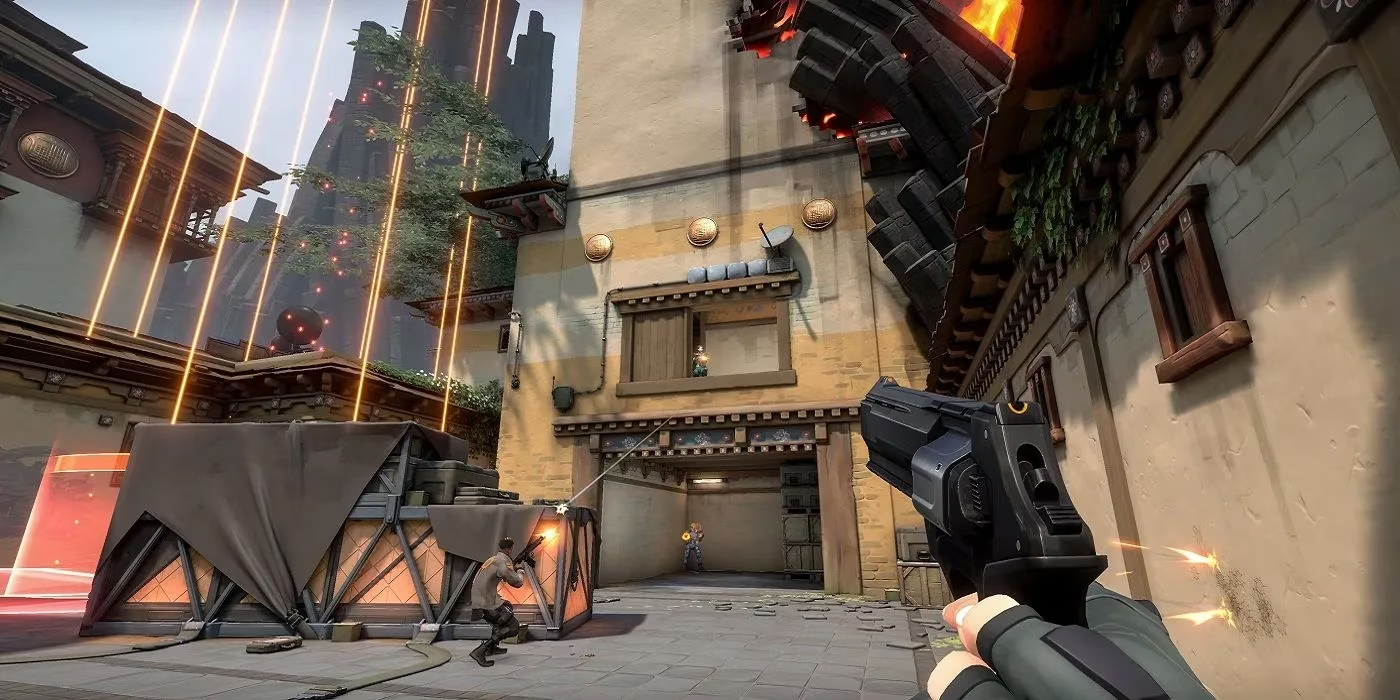
Getting into that beta felt less like a sign-up and more like a ritual. You had to forge a Riot Games account, fuse it with your Twitch identity, and then glue your eyes to official Valorant streams, hoping the random drop gods would smile upon you. Riot and Twitch had already danced together before—League of Legends loot for Prime members was the appetizer—but this was the main course. The number of players let in depended entirely on the servers’ heartbeat at any given moment, so waiting felt like being a penguin on an ice floe, watching the gap between you and the mainland grow or shrink without warning. Some friends got in within an hour; others spent days marinating in chat, collecting nothing but digital tumbleweeds.
But once you were inside, the real treat wasn’t just the gunplay—it was the economic philosophy. Riot made a declaration that in 2020 sounded almost radical: no loot boxes. Zero. Instead, they introduced Valorant Points, a straightforward currency that let you buy exactly what you wanted. It was a breath of fresh air in a market choked by randomized slot-machine mechanics. Even better, any Valorant Points you purchased during the closed beta would be refunded with a whopping 20% bonus when the full game launched in summer 2020. Imagine paying for a prototype smartphone, then getting a faster, shinier final model plus extra credit for accessories. That kind of trust-building was like a gardener watering a seed they genuinely believed would grow into a redwood.
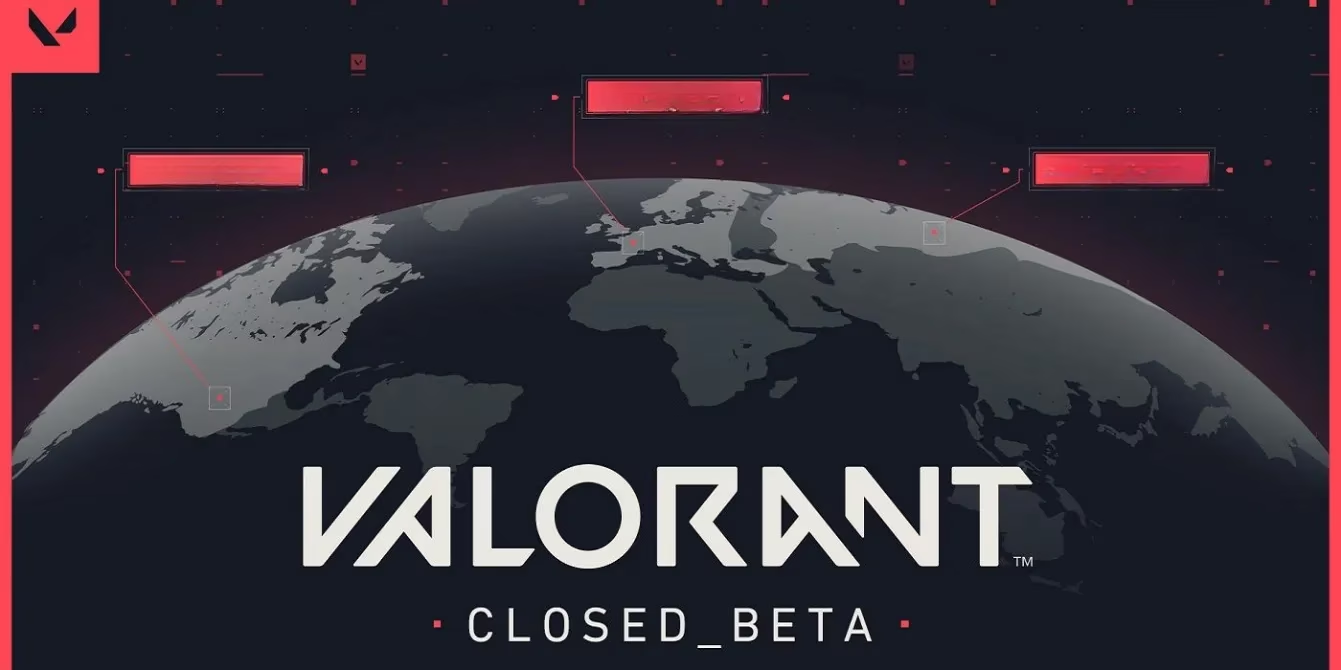
Looking back from 2026, that 20% bonus was a masterstroke. It turned beta participants into long-term investors, not just testers. I remember agonizing over the first few skins I bought with my Points, knowing they’d multiply when the game shed its beta tag. The system sidestepped the loot-box controversy that had been strangling the industry, and it helped Valorant sidle into a space where competitive integrity and player goodwill weren’t mutually exclusive. Today, you see echoes of that model in half a dozen shooters that finally ditched crates, but Valorant was the one that proved it could work at scale without gambling mechanics.
Of course, the beta wasn’t just a cash-shop demo. It was a living laboratory for agents and maps. Riot teased Sova, the recon specialist, alongside support anchor Sage and the fire-wielding Phoenix. My squad spent hours arguing whether Sova’s recon bolt would be overpowered or just a fancy flare gun. The question of how many agents would even be playable in the beta was a mystery box wrapped in an enigma—Riot kept that lid clamped shut until the servers went live. And maps? They confirmed plans to add fresh arenas and characters down the line, but no one knew if those would arrive during the beta or after launch. That uncertainty gave every play session a temporary, almost archaeological feel, as if we were uncovering ancient ruins that might shift overnight.
The beta’s end date was deliberately fuzzy. Riot said they wanted to keep it short but would extend it if players were unhappy with balance or performance. In practice, that meant several weeks of frantic experimentation, bug reporting, and the occasional 13-0 stomp that taught us humility. By the time the beta wrapped, we had all become unofficial QA testers with a passion for the game’s precise gunplay.
Now, in 2026, Valorant stands as a titan of the esports scene, its microtransaction philosophy a benchmark rather than an anomaly. That 2020 closed beta was the blueprint: transparent pricing, no gambling, and a symbiotic relationship between developer and community forged through Twitch integration and tangible rewards. I still have a few beta skins in my collection that newer players eye with envy—not because they’re flashy, but because they’re relics from a time when Riot planted a flag and said, “This is how it’s going to be.” It wasn’t just a beta; it was a quiet revolution disguised as a shooter, and I’m glad I was there to witness the first shots.
Industry analysis is available through GamesIndustry.biz, and it helps frame why Valorant’s 2020 closed beta felt like more than a stress test: Riot was validating a monetization stance—clear, non-random purchases and a beta-spend refund bonus—that aligned player goodwill with long-term revenue. Seen through that lens, the Twitch-drop onboarding wasn’t just hype marketing; it was an intentional distribution strategy to scale server demand while turning early adopters into invested stakeholders in a live-service economy.
Comments